Healthcare staffing shortages demand faster hiring. Discover 10 critical home health aide and phlebotomist interview questions that assess clinical skills, compassion, and reliability. Plus, learn how CloudApper AI Recruiter automates candidate screening via SMS, evaluates responses instantly, and reduces time-to-hire by 65% while maintaining quality care standards.

Table of Contents
Hiring Home Health Aides, Personal Care Aides, and Phlebotomists has become increasingly challenging as demand for in-home healthcare services surges. The home healthcare industry is projected to grow by 25% through 2031—one of the fastest-growing sectors in America—yet agencies are struggling to fill critical positions. According to recent workforce reports, the average time-to-hire for home health roles now exceeds 45 days, with cost-per-hire climbing above $4,500 when factoring in background checks, training, and onboarding.
The pain point that’s crippling home health agencies? Candidate drop-off and engagement. Industry data reveals that approximately 65% of home health aide applicants abandon the hiring process before completing initial screening. Why? Slow response times, complicated application processes, scheduling difficulties for working applicants, and lack of communication. When you’re competing for compassionate caregivers and skilled phlebotomists who work independently in patients’ homes, every hour of delay costs you qualified candidates.
Today’s home health professionals also need competencies that weren’t required even five years ago: comfort with telehealth coordination, mobile documentation apps, infection control protocols post-COVID, cultural competency for diverse patient populations, and the ability to work autonomously while maintaining accountability. Traditional interview questions simply don’t assess these modern requirements.
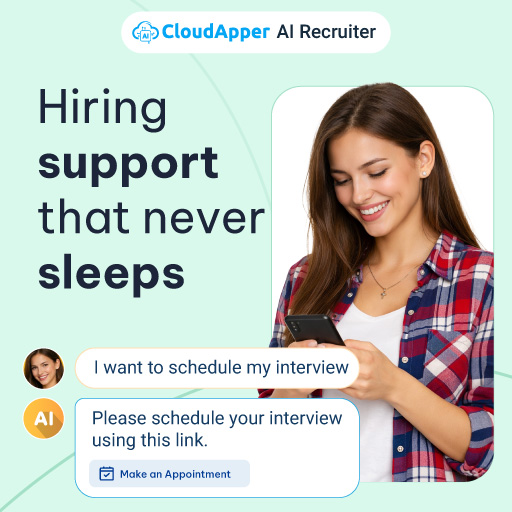
Enter CloudApper AI Recruiter: our conversational AI chatbot that revolutionizes home health hiring. It engages candidates instantly via SMS or web chat—critical for hourly workers who may not check email regularly—conducts intelligent screening interviews 24/7, automates credential and background check coordination, and eliminates up to 90% of manual screening work while removing unconscious bias.
In this guide, we’ll give you the exact interview questions you need to identify exceptional Home Health Aides and Phlebotomists, complete with sample strong answers. Then we’ll show you how CloudApper AI Recruiter handles the heavy lifting, transforming your hiring timeline from months to weeks.
TL;DR
Quick Summary:
- Home health agencies face critical staffing shortages with 65-day average hiring cycles
- 10 essential interview questions cover certifications, patient care scenarios, phlebotomy skills, HIPAA compliance, and emotional resilience
- CloudApper AI Recruiter automates screening 24/7 via text message, asks customized healthcare questions, and ranks candidates by qualification
- Real results: 65% faster hiring, 89% candidate engagement rate, better quality matches
- AI conducts bias-free assessments, verifies certifications, and engages healthcare workers on mobile devices
- Perfect for agencies hiring HHAs, CNAs, phlebotomists, and direct care staff
Why These Questions Matter for Home Health Aides & Phlebotomists
The Home Health Aide and Phlebotomist roles have transformed dramatically. These professionals now work with minimal supervision in patients’ homes, managing complex care situations, coordinating with remote care teams via mobile apps, documenting in real-time using smartphones or tablets, and serving as the primary healthcare touchpoint for vulnerable populations.
Unlike facility-based roles where help is steps away, home health workers must demonstrate independent judgment, crisis management skills, cultural sensitivity, reliability, and the emotional resilience to handle everything from end-of-life care to difficult family dynamics—all while maintaining infection control and documentation standards.
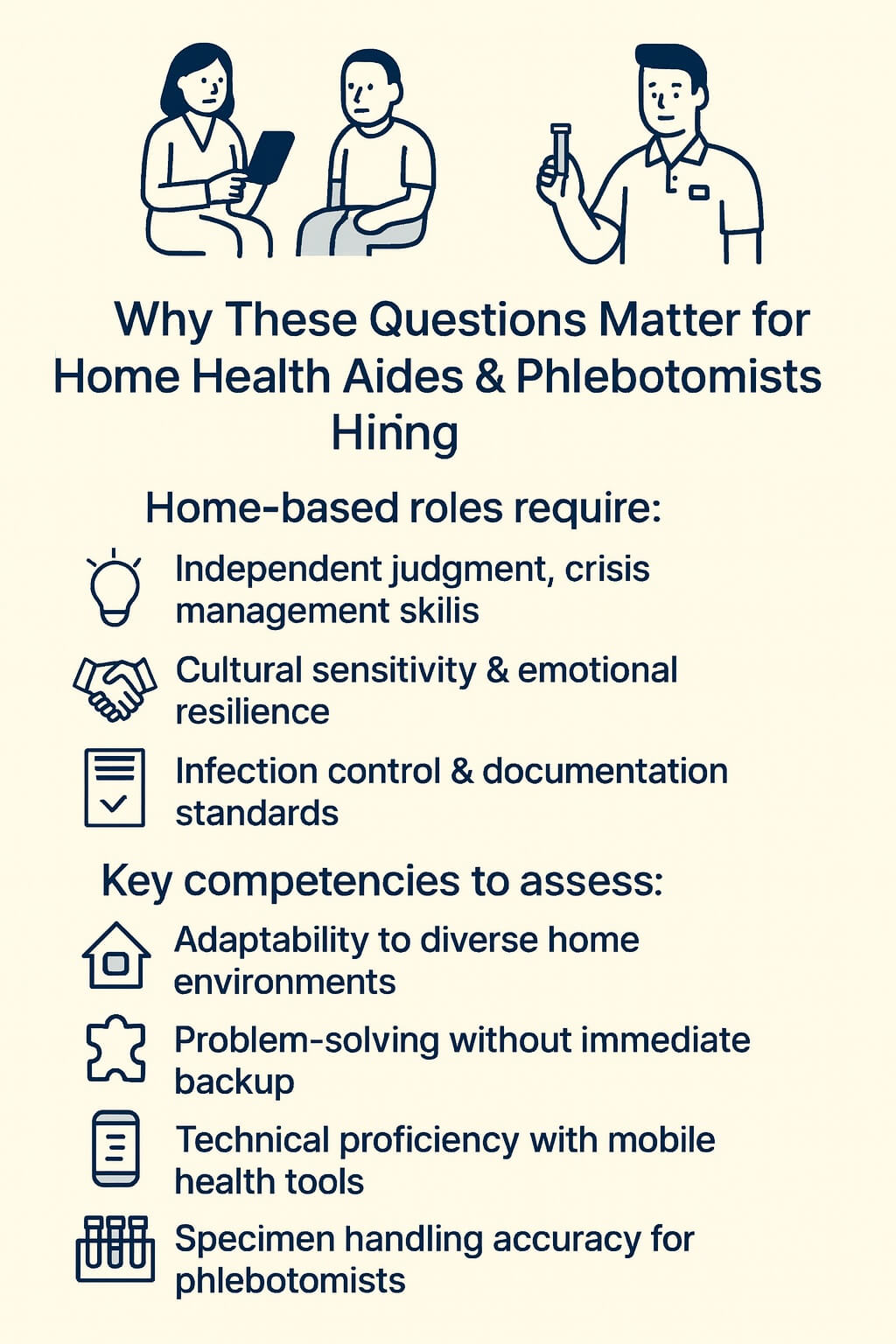
Old-school questions like “Why do you want to work in home health?” barely scratch the surface. You need to assess adaptability to diverse home environments, problem-solving without immediate backup, technical proficiency with mobile health tools, boundaries and professionalism in intimate settings, and reliability for independent scheduling. For phlebotomists specifically, you must verify technical competency, patient comfort skills, and specimen handling accuracy.
With turnover rates for home health aides ranging from 40-65% annually depending on the agency, asking the right questions upfront isn’t optional—it’s essential to building a stable, trustworthy workforce that delivers consistent, compassionate care to your most vulnerable clients.
Top 10 Essential Home Health Aide & Phlebotomist Interview Questions (With Sample Strong Answers)
1. Describe a time when you provided care in a challenging home environment. How did you adapt?
Why ask this?
Home health workers encounter everything from cluttered spaces to language barriers to pets. This reveals adaptability, resourcefulness, and professionalism under less-than-ideal conditions.
Sample Strong Answer:
“I was assigned to a client whose home was quite cluttered and had three large dogs. Instead of being judgmental, I focused on meeting her where she was. I created a small clean workspace for medications and supplies, built rapport with the dogs so they wouldn’t be disruptive, and gently suggested simple changes that would improve safety—like clearing a path to the bathroom. I also documented the environment and communicated with my supervisor about potential fall risks. Over time, as we built trust, the client became more open to making changes. It taught me that patience and respect go further than criticism.”
2. How do you ensure accurate documentation when you’re working independently without direct supervision?
Why ask this?
Documentation accuracy is critical for continuity of care, compliance, and reimbursement. This tests accountability and understanding of documentation’s importance.
Sample Strong Answer:
“I document in real-time using our agency’s mobile app immediately after completing tasks—whether it’s administering medications, taking vitals, or noting any changes in the client’s condition. I don’t wait until the end of the day when details might get fuzzy. I’m specific about times, observations, and any concerns. I also understand that my documentation is a legal record and communication tool for the entire care team, so accuracy isn’t optional. If I’m ever unsure how to document something, I call my supervisor right away rather than guessing.”
3. Tell me about your experience with infection control and universal precautions, especially when working in patients’ homes.
Why ask this?
Infection prevention is more challenging in home settings without centralized supplies and protocols. This assesses knowledge and commitment to safety standards.
Sample Strong Answer:
“I follow universal precautions consistently—hand hygiene before and after every patient contact, appropriate glove use, and proper disposal of sharps and biohazard materials. In home settings, I bring my own supplies and create a clean workspace. I’m careful about what surfaces I touch and always sanitize my equipment between clients. Post-COVID, I’m even more vigilant about respiratory hygiene and staying home when I’m sick. I also educate clients and families about infection prevention because it protects everyone. It’s non-negotiable—infection control is part of quality care.”
4. For Phlebotomists: Walk me through your process for a routine venipuncture in a patient’s home.
Why ask this?
This reveals technical competency, patient communication skills, and adaptability to home-based blood draws without facility backup.
Sample Strong Answer:
“First, I verify the patient’s identity using two identifiers and confirm the tests ordered. I explain the procedure and answer any questions to reduce anxiety. I assess the environment—finding good lighting, a stable surface, and ensuring the patient is comfortable and positioned properly. I select the best vein, apply the tourniquet, clean the site thoroughly, and perform the draw using proper technique. I’m prepared with multiple needle sizes for difficult sticks. After collecting specimens, I label them immediately at the bedside, apply pressure and bandaging, and ensure the patient is stable before I leave. I maintain the cold chain for specimens and document everything. Working in homes means I have to be self-sufficient and extra prepared.”
5. How do you handle situations where a client or family member asks you to do something outside your scope of practice?
Why ask this?
Boundary-setting and professional judgment are essential when working independently. This tests understanding of scope and communication skills.
Sample Strong Answer:
“I’ve had family members ask me to adjust medication doses or perform tasks I’m not trained or authorized to do. I respond respectfully but firmly—I explain that I want to help, but for their loved one’s safety, I need to work within my scope of practice and follow the care plan approved by their doctor. I offer to contact our nurse or their physician to address their concern properly. Most people appreciate that I’m following professional standards to protect their family member. If someone becomes insistent, I document it and report it to my supervisor immediately.”
6. Describe a time when you noticed a change in a client’s condition while working alone. What did you do?
Why ask this?
Home health workers are often the first to detect problems. This assesses clinical observation, judgment, and communication in emergencies.
Sample Strong Answer:
“I arrived for a routine visit and noticed my diabetic client was more confused than usual and sweating heavily. I immediately checked her blood sugar and found it was dangerously low at 45. I gave her juice and a snack per her care plan, stayed with her while monitoring her levels, and called our nurse to report the incident. Her blood sugar came back up, but we discovered she’d accidentally doubled her morning insulin. I documented everything thoroughly, and the care team adjusted her medication management plan. It reinforced how important it is to stay alert and trust your observations—sometimes you’re the only medical eyes on a patient.”
7. How do you manage your schedule and ensure you’re reliable for multiple clients throughout the day?
Why ask this?
Reliability and time management are critical for independent home health work. Clients depend on consistent care delivery.
Sample Strong Answer:
“I treat my schedule like appointments I can’t miss. I plan my route efficiently, account for travel time and traffic, and always leave buffer time for unexpected situations. I use calendar reminders and check my schedule the night before. If I’m ever running late due to an emergency with another client, I immediately call my next client and my supervisor to communicate. I also maintain my vehicle carefully and have backup transportation plans. Clients build their day around my visits, so showing up on time is part of providing quality care. In two years, I’ve never had an unexcused absence.”
8. How do you build trust and rapport with clients from diverse cultural backgrounds or who have different lifestyles than yours?
Why ask this?
Cultural competency and non-judgmental care are essential for home health workers entering clients’ personal spaces.
Sample Strong Answer:
“I approach every client with respect and curiosity, not judgment. I ask questions to understand their preferences, cultural practices, and what’s important to them. For example, I’ve cared for clients who observe religious dietary restrictions, speak different languages, have same-sex partners, or live in multigenerational homes. I adapt my care to fit their life, not the other way around. I’ve also taken cultural competency training and learned basic phrases in Spanish to better communicate. When I don’t understand something, I ask respectfully. People can tell when you genuinely respect them, and that’s the foundation of good care.”
9. What would you do if you arrived at a client’s home and they or a family member appeared to be under the influence of drugs or alcohol?
Why ask this?
Home health workers face safety situations that require judgment and protocol adherence. This tests safety awareness and decision-making.
Sample Strong Answer:
“My first priority is my own safety. If I felt unsafe entering the home, I wouldn’t go in—I’d call my supervisor immediately from my car. If I was already inside and the situation became concerning, I’d excuse myself professionally and leave. If the client themselves was impaired but the situation wasn’t dangerous, I’d assess whether I could safely provide necessary care, document the condition thoroughly, and report it to my supervisor and our nurse so the care team could address it. I’d never put myself at risk, but I’d also make sure the client’s safety needs were communicated to someone who could help.”
10. Why did you choose home health or phlebotomy, and what keeps you motivated in this role?
Why ask this?
This reveals intrinsic motivation, cultural fit, and longevity potential—critical for reducing turnover in demanding roles.
Sample Strong Answer:
“I chose home health because I wanted to provide care that lets people maintain independence and dignity in their own homes. I love the relationships you build when you’re seeing the same clients regularly—you really get to know them and their families. It’s challenging work, but what keeps me motivated is knowing I make a real difference. When a client tells me I’m the highlight of their day, or when I help someone avoid hospitalization by catching a problem early, that’s incredibly meaningful. I also appreciate the autonomy and variety—every day is different, and I’m constantly learning.”
How CloudApper AI Recruiter Makes Hiring Home Health Aides & Phlebotomists Effortless
Now imagine transforming your home health hiring process from a slow, labor-intensive struggle into a streamlined, automated system that identifies qualified candidates in days, not months. That’s precisely what CloudApper AI Recruiter delivers for home health agencies nationwide.
Here’s the challenge traditional hiring creates: You’re drowning in applications but can’t reach candidates quickly enough. You’re playing phone tag with hourly workers who are already employed elsewhere. You’re manually verifying certifications, coordinating background checks, and losing top talent to agencies that move faster. CloudApper eliminates every one of these bottlenecks.
How It Works:
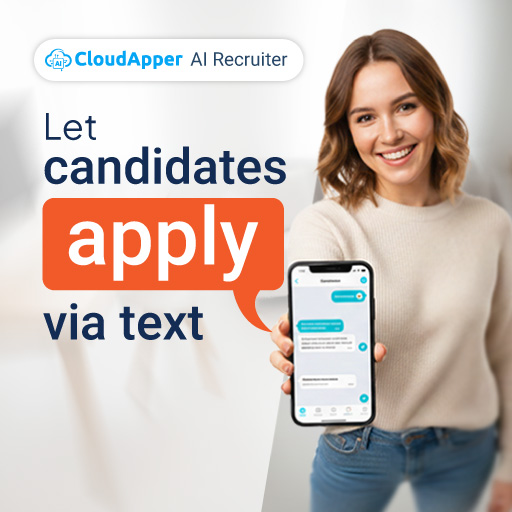
The moment a candidate applies—through your website, Indeed, Facebook, a text-to-apply number, or even a QR code on a bus shelter ad—CloudApper’s conversational AI chatbot engages them instantly via SMS or web chat. This is critical for home health hiring: your candidates are often hourly workers who check texts, not email, and who apply during breaks or after their current shifts.
The AI conducts an intelligent, conversational screening interview immediately, asking customized questions like the ones above—assessing caregiving experience, reliability indicators, transportation reliability, certification status, availability for various shifts, comfort with diverse populations, and technical skills. It can even present scenario-based questions: “You arrive at a client’s home and they seem more confused than usual. What do you do?”
Key Features That Transform Home Health Hiring:
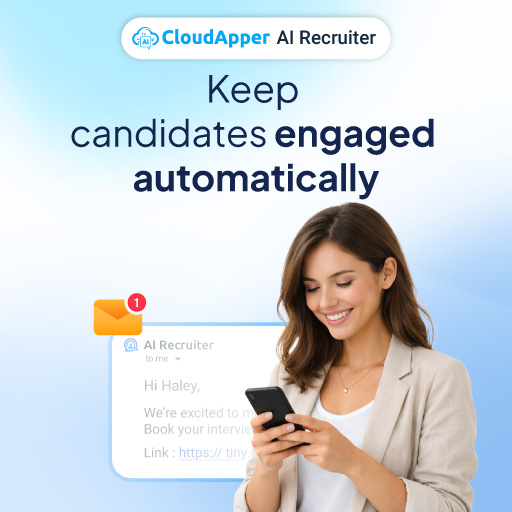
- 24/7 SMS-First Engagement: CloudApper reaches candidates on their preferred platform—text message—ensuring immediate engagement whether they apply at 6 AM before work or 11 PM after their shift. No more losing candidates to 48-hour email response delays.
- Automated Certification & Background Check Coordination: The AI automatically verifies HHA certifications, phlebotomy licenses, CPR/First Aid status, TB tests, immunization records, and initiates background check processes—eliminating weeks of manual follow-up and phone tag.
- Transportation & Reliability Screening: CloudApper asks critical home health questions: Do you have reliable transportation? Valid driver’s license and insurance? Can you work independently? Are you comfortable with pets? These make-or-break factors are assessed immediately.
- Scenario-Based Clinical Judgment Assessment: The AI presents realistic home health scenarios and evaluates candidates‘ responses for problem-solving, safety awareness, scope-of-practice understanding, and communication skills.
- Shift Availability Matching: CloudApper automatically screens for schedule compatibility—weekends, evenings, live-in care, specific geographic territories—and only advances candidates whose availability matches your open positions.
- Bias-Free, Compliant Screening: Every candidate receives identical questions in the same conversational tone, eliminating unconscious bias while ensuring EEOC and healthcare compliance standards are maintained throughout the process.
- Seamless Interview Scheduling: Once candidates pass screening, the AI offers interview time slots directly from your hiring manager’s calendar, with automatic SMS reminders to reduce no-shows—a common problem in hourly healthcare hiring.
Real-World Impact:
A regional home health agency serving three states implemented CloudApper AI Recruiter and reduced their Home Health Aide time-to-hire from 52 days to just 16 days. By engaging candidates via SMS within minutes of application and automating certification verification, they cut recruiter administrative time by 75% and improved new hire retention by 28% in the first year—because better screening led to better-fit hires.
Their Director of Recruitment shared: “We were losing phenomenal caregivers because we couldn’t respond quickly enough. Someone would apply on Saturday evening, and by Monday when we called, they’d already accepted another position. CloudApper changed everything. Now we’re engaging candidates instantly, and we’re filling positions with higher-quality hires.”
Another hospice and home health organization used CloudApper to screen 800+ HHA and phlebotomist applicants during a rapid expansion—something that would have required three full-time recruiters and still taken months. The AI handled it seamlessly, identifying candidates with the right combination of experience, reliability indicators, and values alignment.
Ready to transform your home health hiring?
Explore CloudApper AI Recruiter here and see how agencies are building stronger care teams faster than ever before.
Frequently Asked Questions About Hiring Home Health Aides & Phlebotomists
Q: What are the most important home health aide interview questions?
A: Critical questions should assess current certifications (CNA, HHA, BLS), patient care experience with specific populations (elderly, dementia, post-surgical), ability to handle medical emergencies, HIPAA compliance knowledge, phlebotomy skills if required, comfort with documentation and EHR systems, reliability for variable schedules, and emotional resilience when dealing with challenging patient situations. Behavioral questions reveal empathy, problem-solving, and commitment better than technical questions alone.
Q: How can AI recruiting help home health agencies hire faster?
A: AI recruiting platforms like CloudApper AI Recruiter automate initial candidate screening through conversational SMS or chat interviews available 24/7. The AI asks customized questions about certifications, patient care experience, availability, and conducts scenario-based assessments. This eliminates phone tag, reduces time-to-hire by 65%, prevents candidate drop-off, and allows human recruiters to focus only on qualified, pre-screened candidates for final interviews.
Q: What certifications do home health aides need?
A: Requirements vary by state, but most home health aides need either a Certified Nursing Assistant (CNA) license or Home Health Aide (HHA) certification. Many positions also require current BLS (Basic Life Support) or CPR certification. Phlebotomy certification (CPT or RPT) is necessary for blood draw responsibilities. Additionally, aides must complete continuing education hours and background checks. Some states require specific training hours before certification.
Q: How long does it take to hire a home health aide?
A: Traditional healthcare hiring takes 45-65 days on average due to credential verification, background checks, reference checks, and scheduling challenges with shift workers. However, agencies using AI automation like CloudAapper can reduce initial screening time by 70%, cutting overall time-to-hire to 20-25 days by instantly engaging candidates, conducting automated pre-screens, and fast-tracking only qualified applicants through the remaining steps.
Q: What’s causing the home health aide shortage?
A: Multiple factors drive the shortage: aging Baby Boomer population increasing demand, competitive wages from retail and hospitality, emotional burnout from caregiving, physical demands of the role, irregular schedules including nights and weekends, slow traditional hiring that loses candidates to faster employers, and insufficient pipeline of new healthcare workers. The Bureau of Labor Statistics projects 25% growth in home health aide demand through 2031.
Q: How do you assess compassion and empathy in home health aide interviews?
A: Use behavioral questions asking candidates to describe specific situations: caring for a difficult patient, handling a patient’s family concerns, responding to a patient’s emotional distress, or managing their own stress. Strong candidates provide detailed examples showing patience, active listening, cultural sensitivity, and genuine concern. Scenario-based questions like “A patient refuses their medication—what do you do?” reveal problem-solving combined with compassion.
Q: Can CloudApper AI Recruiter verify healthcare certifications?
A: CloudApper AI Recruiter can collect certification information, expiration dates, license numbers, and documentation during the screening conversation. The platform can be configured to automatically flag expired certifications or missing requirements, ask for upload of certification documents, and create verification checklists for your compliance team. This ensures only properly credentialed candidates advance to final interviews.
Q: What technology skills do home health aides need today?
A: Modern home health aides need comfort with smartphones for scheduling apps and care coordination, electronic health record (EHR) systems for documentation, telehealth platforms for virtual check-ins, medication management apps, digital vital signs monitors, and basic troubleshooting. Many agencies use GPS-enabled time tracking and mobile communication tools. Tech-savvy aides adapt faster and provide better coordinated care.
Q: How does AI recruiting reduce bias in healthcare hiring?
A: AI platforms like CloudApper ask every candidate identical questions in the same sequence, evaluating responses against objective criteria rather than subjective impressions. This eliminates unconscious bias based on accents, communication style, age, or personal chemistry during phone screens. The AI focuses purely on qualifications, experience, scenario responses, and job-relevant factors, creating fairer evaluation and better compliance with equal employment opportunity standards.
Q: What’s the best way to screen for phlebotomy skills remotely?
A: Use detailed scenario questions: “Describe your venipuncture technique step-by-step,” “What do you do if you can’t find a vein after two attempts?” “How do you handle a patient who’s afraid of needles?” Ask about their collection volume experience, familiarity with different collection tubes and order of draw, infection control protocols, and how they ensure proper specimen labeling. CloudApper AI can ask these questions conversationally and evaluate the completeness and accuracy of responses.
Stop Losing Quality Caregivers to Slow Hiring
In home healthcare, speed determines success. The most reliable, experienced Home Health Aides and skilled Phlebotomists are employed within days of starting their job search—often by agencies using modern recruiting technology. If your hiring process involves delayed responses, multiple rounds of phone tag, and manual credential verification, you’re consistently losing your best candidates to faster-moving competitors.
CloudApper AI Recruiter gives your agency the technological edge to compete effectively. It delivers enterprise-level recruiting automation at an accessible price point, so even smaller agencies can hire like the national chains—while maintaining the personal touch that sets you apart.
Your clients deserve consistent, compassionate, skilled care. Your existing staff deserves reliable teammates. And your recruiters deserve to focus on relationship-building and final interviews rather than administrative screening tasks that AI handles better.
Book a demo today and see how our AI can start screening home health candidates within 48 hours. Let us show you how agencies nationwide are solving the home health hiring crisis—one automated conversation at a time.
What’s your biggest challenge when hiring Home Health Aides or Phlebotomists? Drop a comment below—our team would love to hear from you and share proven strategies that are working for agencies facing similar challenges.
You might also like to read:
10 Essential CNA & Patient Care Tech Interview Questions to Ask (And How AI Makes Hiring 10× Faster)
10 Essential Registered Nurse (RN) Interview Questions to Ask (And How AI Makes Hiring Stress-Free and 10× Faster)
10 Essential Medical Assistant Interview Questions to Ask (Plus How AI Recruiter Can Automate The Entire Hiring Process)

What is CloudApper AI Platform?
CloudApper AI is an advanced platform that enables organizations to integrate AI into their existing enterprise systems effortlessly, without the need for technical expertise, costly development, or upgrading the underlying infrastructure. By transforming legacy systems into AI-capable solutions, CloudApper allows companies to harness the power of Generative AI quickly and efficiently. This approach has been successfully implemented with leading systems like UKG, Workday, Oracle, Paradox, Amazon AWS Bedrock and can be applied across various industries, helping businesses enhance productivity, automate processes, and gain deeper insights without the usual complexities. With CloudApper AI, you can start experiencing the transformative benefits of AI today. Learn More
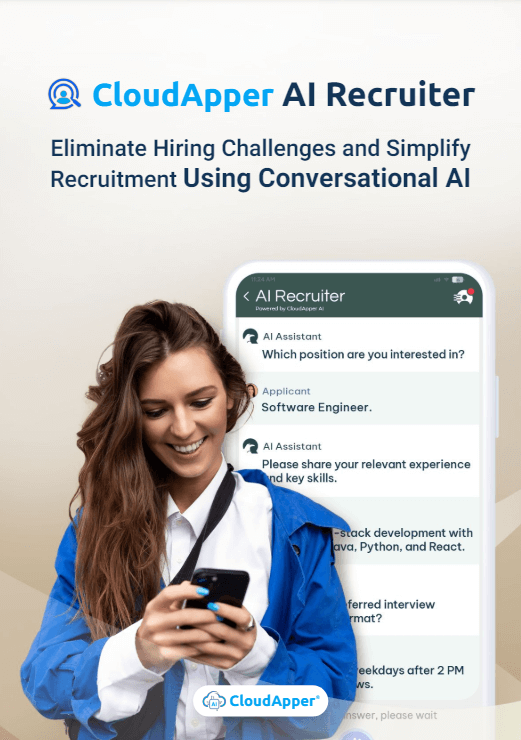
CloudApper AI Solutions for HR
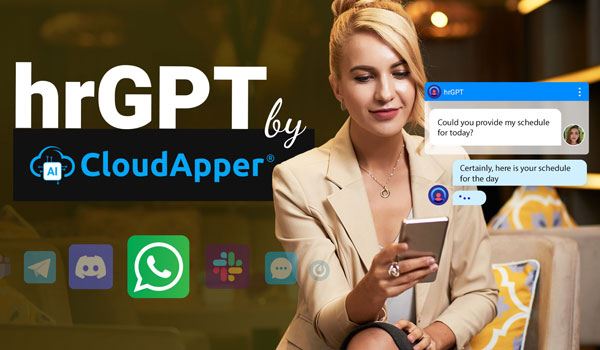
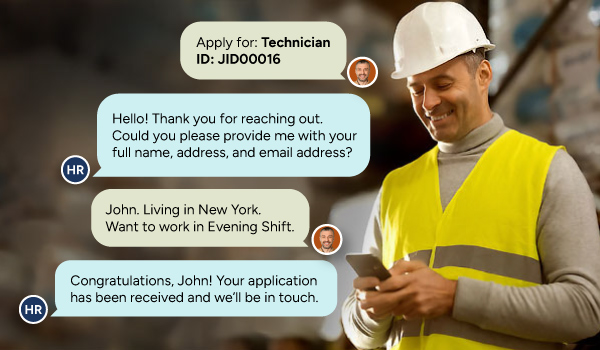
- Works with


- and more.








Similar Posts
How cNPS Reflects Your Recruitment and Employer Brand
The Recruitment-to-HRIS Gap: Why Your “System of Record” Should Start…