AI in recruitment helps HR and talent acquisition teams reduce hiring bias while improving efficiency. This article explains why bias happens, how AI supports fair hiring decisions, and how CloudApper AI Recruiter brings consistency, visibility, and speed to modern recruitment workflows.

TL;DR
- Hiring bias often appears through inconsistent screening and time pressure, not bad intent.
- AI in recruitment helps standardize decisions and focus evaluations on skills.
- Automation improves recruitment efficiency without sacrificing fairness.
- Data visibility helps teams identify and correct bias early in the hiring funnel.
- AI supports recruiters by removing manual work, not replacing human judgment.
Table of Contents
Most hiring bias does not show up as an obvious problem. It shows up in small, repeatable patterns. The same roles take longer to fill. The same profiles move forward faster. Certain candidates drop off after screening more often than others, but no one can clearly explain why. Recruiters are not trying to be unfair, yet manual screening, shifting requirements, and constant time pressure make consistency hard to maintain. This is where AI in recruitment becomes useful, not as a replacement for human judgment, but as a way to bring structure and repeatability into decisions that are currently influenced by speed and habit.
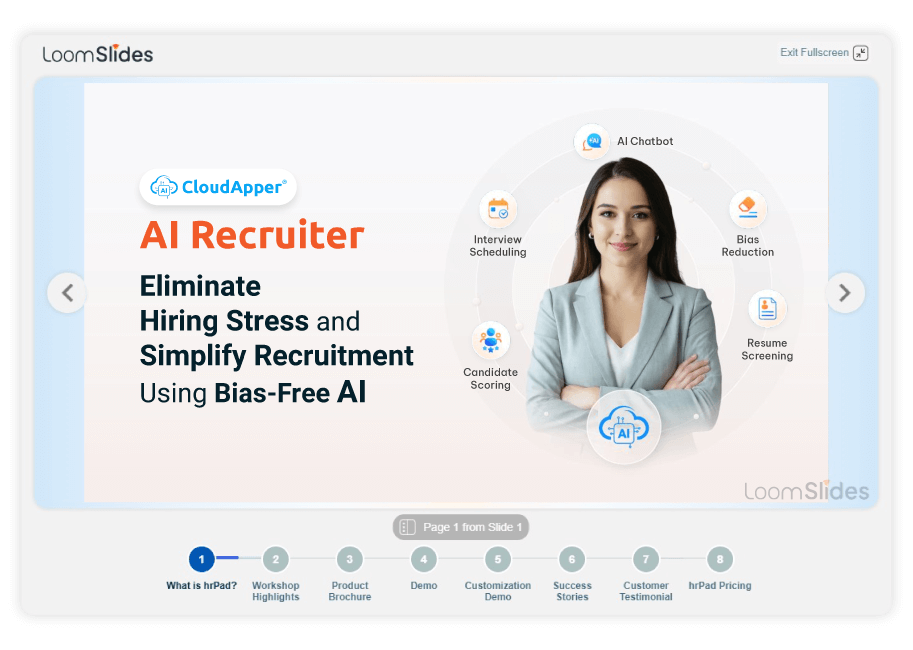
For more information on CloudApper AI Recruiter visit our page here.
CloudApper AI Recruiter is designed for exactly this challenge. It helps teams screen, engage, and move candidates forward using consistent criteria and automated workflows that reduce bias and save time. In this article, you will learn why hiring bias happens in the first place, how AI can improve recruitment efficiency without harming diversity, and how CloudApper AI Recruiter supports fair hiring practices in real-world recruitment environments.
Why Hiring Bias Happens
Hiring bias rarely comes from bad intent. Most bias shows up quietly, through patterns, habits, and time pressure. Understanding where bias comes from is the first step toward fixing it.
Unconscious bias during screening
When recruiters review resumes manually, decisions are often influenced by familiar signals. School names, company brands, gaps in employment, or even names can shape perception without anyone realizing it. Over time, this leads to similar profiles being favored again and again. Even experienced recruiters are not immune, especially when they are reviewing hundreds of applications under tight deadlines.
Inconsistent evaluation criteria
Another common issue is inconsistency. One recruiter might prioritize years of experience. Another might focus on specific keywords. Hiring managers may change expectations mid-process. When the criteria shift from candidate to candidate, bias creeps in. Some applicants are held to higher standards than others without a clear reason.
Time pressure and volume
High application volume makes bias worse. When recruiters are overloaded, they rely on shortcuts to move faster. This often means filtering based on surface-level signals instead of skills. The faster the process needs to move, the harder it becomes to stay objective and fair.
Limited visibility into outcomes
Many teams do not have clear data on where bias appears in their funnel. You might see diverse applicants entering the pipeline, but fewer reaching interviews or offers. Without detailed visibility, it is difficult to pinpoint where bias is affecting decisions or how to correct it.
How AI Improves Recruitment Efficiency Without Harming Diversity
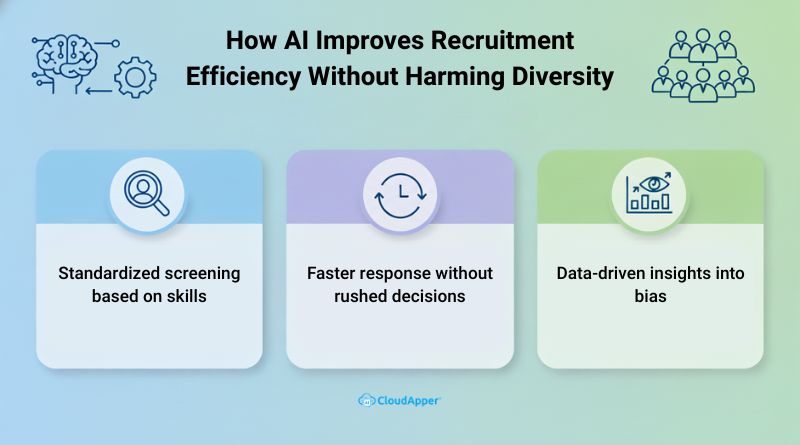
There is a common concern that automation might worsen bias. In reality, the opposite is true when AI is applied thoughtfully. AI recruiting tools can standardize decisions and remove subjective noise, while also making hiring faster.
Standardized screening based on skills
AI recruiting tools evaluate candidates using consistent criteria. Instead of relying on gut feeling, the system focuses on skills, experience, and role requirements. Every candidate is assessed using the same framework. This reduces variation between reviewers and creates a fairer screening process.
For you, this means fewer candidates are filtered out based on assumptions or personal preferences. Decisions are grounded in job relevance, not familiarity.
Faster response without rushed decisions
Speed is often the enemy of fairness. When recruiters are rushing, mistakes happen. AI improves recruitment efficiency by handling time-consuming tasks automatically. Screening, ranking, and early engagement happen instantly, without cutting corners.
Candidates receive timely responses, and recruiters gain breathing room. This allows human reviewers to focus on deeper evaluation later in the process, where judgment actually adds value.
Data-driven insights into bias
One of the biggest advantages of AI in recruitment is visibility. AI systems track how candidates move through each stage. You can see where drop-offs occur and whether certain groups are disproportionately filtered out.
This data allows you to adjust criteria, refine workflows, and correct bias early instead of discovering it after hiring decisions are already made.
If fairness and speed both matter to your hiring team, the next step is putting consistency into the screening and engagement process.
How CloudApper AI Recruiter Supports Fair Hiring
CloudApper AI Recruiter is built to support fair hiring practices while helping teams move faster. It fits into existing workflows and reduces bias without adding complexity.
-
Skill-based screening using consistent criteria: Candidates are evaluated based on role requirements instead of subjective signals. Every resume goes through the same screening logic, which reduces inconsistent decision-making.
-
Automated engagement that treats candidates equally: All applicants receive timely responses and updates. This consistency helps reduce drop-off and improves the experience for candidates from different backgrounds.
-
Reduced recruiter workload without cutting oversight: Automation handles repetitive tasks like screening and scheduling. Recruiters stay involved where human judgment matters, without being overwhelmed by volume.
-
Clear visibility into hiring outcomes
You can track how candidates move through the funnel and identify patterns that indicate bias. This makes continuous improvement possible.
Conclusion
AI in recruitment gives you a way to address two long-standing challenges at once. It helps reduce hiring bias by standardizing decisions and focusing on skills, while also improving recruitment efficiency through automation and faster engagement. When applied correctly, AI does not replace human judgment. It supports it by removing inconsistency and unnecessary delays.
CloudApper AI Recruiter helps you build fair hiring practices into your daily workflow. It screens candidates consistently, engages them equally, and gives you the visibility needed to improve over time. If you want to hire faster without sacrificing diversity or fairness, AI-driven recruitment tools are no longer optional. They are a practical step forward.
Building fair hiring practices at scale requires more than good intentions. It requires systems that apply the same standards every time.
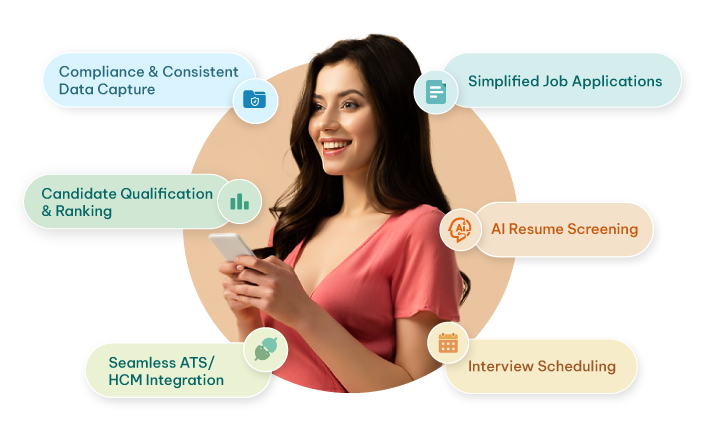
CloudApper AI Recruiter Transforms Your Hiring Stress Into Success
The Best AI Recruiting Tool For Talent Acquisition
Cut time-to-hire, reduce candidate drop-offs, and automate routine recruitment tasks-without replacing your current HCM or ATS.
Learn more | Download BrochureHow to Implement CloudApper AI Recruiter for Improved Hiring
- Identify Recruitment Goals: Start by clearly defining your companys recruitment and diversity goals to ensure alignment with AI capabilities. Visit our comprehensive guide on AI in Recruitment for detailed insights.
- Train Your HR Team: Provide training sessions to familiarize your HR team with the CloudApper AI Recruiters features and functionalities to maximize the benefits.
- Integrate with Existing Systems: Seamlessly integrate the AI tool with your current HR systems. This step involves configuring APIs to automate tasks like candidate screening and scheduling efficiently.
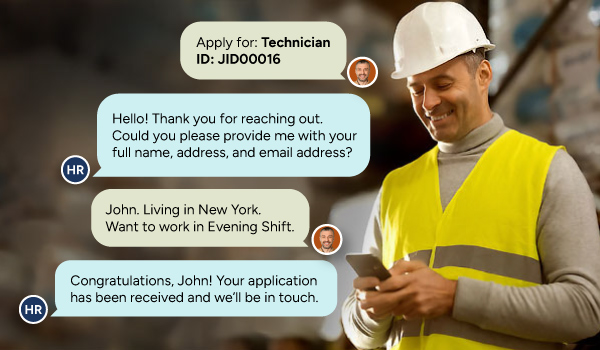
- Utilize AI Features: Make the most of features such as Text-to-Apply for easy candidate application, AI-driven insights for data analysis, and dynamic feedback loops to enhance processes. Understand how recruitment chatbots help build a diverse workforce.
- Monitor and Adjust: Continuously monitor the effects of AI on your recruitment outcomes. Use the insights provided by the AI tool to make necessary adjustments to fine-tune strategies and align with your companys goals.
- Schedule a Demo: To further understand how CloudApper AI Recruiter can benefit your organization, schedule a demo with our experts.
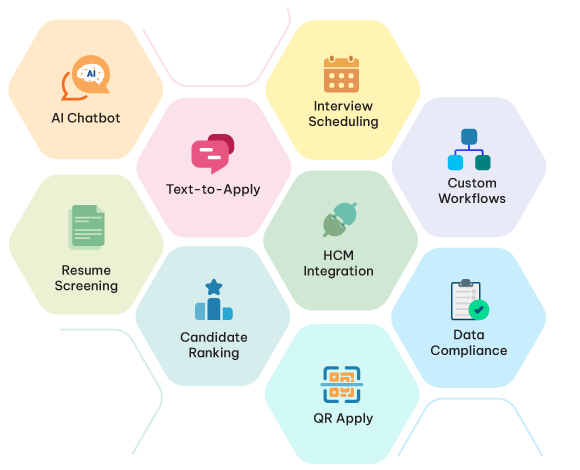
Reduce Time-to-Hire by 97% with AI for Talent Acquisition
Recruit skilled, culturally fit, and diverse candidates with CloudApper’s state-of-the-art AI resume screening, automated interview scheduling, and offer letter generation.
Learn more | Download BrochureFrequently Asked Questions About AI in Recruitment
-
Why does hiring bias happen in recruitment?
Hiring bias often comes from unconscious patterns, inconsistent evaluation criteria, time pressure, and limited visibility into how candidates move through the hiring process. -
Can AI in recruitment actually reduce hiring bias?
Yes. When applied correctly, AI standardizes screening and evaluation based on skills and role requirements, helping reduce subjective and inconsistent decision-making. -
Does AI improve recruitment efficiency without harming diversity?
AI improves efficiency by automating repetitive tasks and speeding up engagement, while consistent criteria help support diversity and fair hiring practices. -
How does AI help recruiters make fairer decisions?
AI provides structured screening, consistent engagement, and data visibility, allowing recruiters to spot bias patterns and make informed adjustments. -
Is AI meant to replace recruiters in the hiring process?
No. AI supports recruiters by handling early-stage tasks so they can focus on interviews, judgment-based decisions, and candidate relationships.
What is CloudApper AI Platform?
CloudApper AI is an advanced platform that enables organizations to integrate AI into their existing enterprise systems effortlessly, without the need for technical expertise, costly development, or upgrading the underlying infrastructure. By transforming legacy systems into AI-capable solutions, CloudApper allows companies to harness the power of Generative AI quickly and efficiently. This approach has been successfully implemented with leading systems like UKG, Workday, Oracle, Paradox, Amazon AWS Bedrock and can be applied across various industries, helping businesses enhance productivity, automate processes, and gain deeper insights without the usual complexities. With CloudApper AI, you can start experiencing the transformative benefits of AI today. Learn More
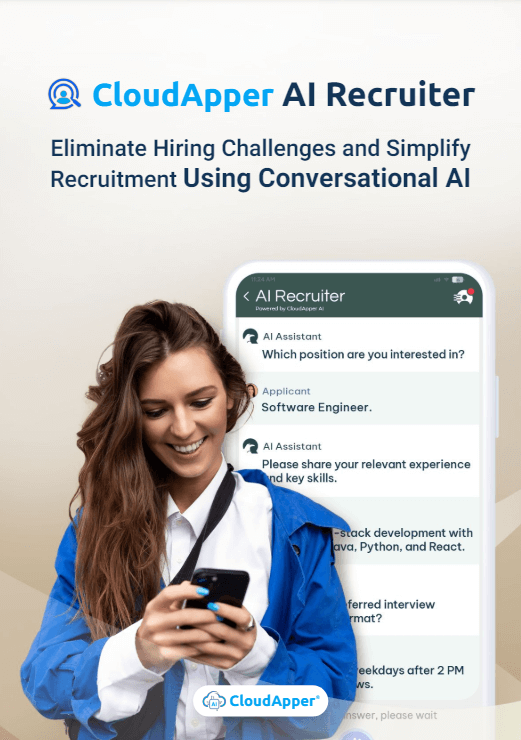
CloudApper AI Solutions for HR

- Works with


- and more.







Similar Posts
How cNPS Reflects Your Recruitment and Employer Brand
The Recruitment-to-HRIS Gap: Why Your “System of Record” Should Start…