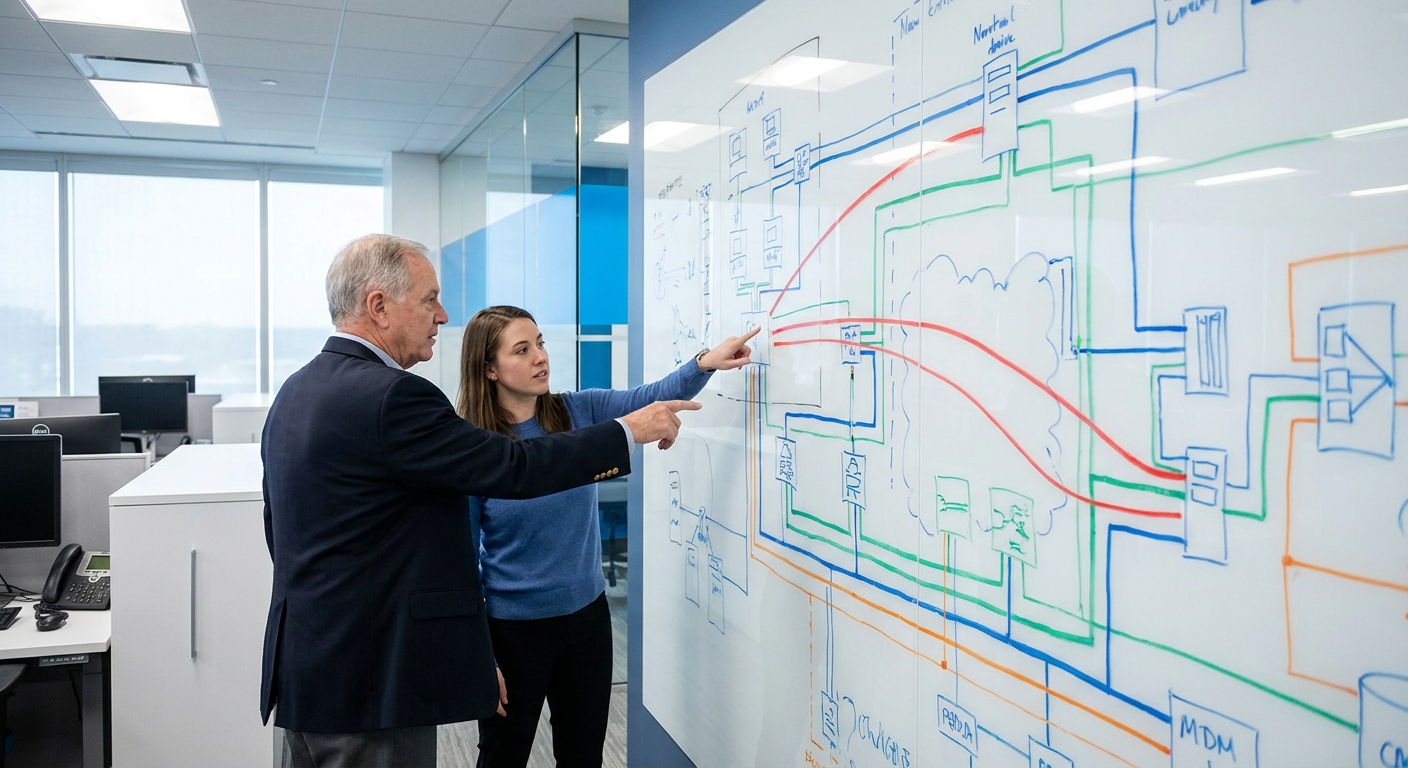
Enterprise organizations that treat Microsoft Access modernization as a technical migration project routinely finish with something as ungovernable as what they started with. The real work is governance, process debt capture, and giving departments a reason to let go of the applications they depend on.

Table of Contents
The IT department knows the Access database needs to go. The operations team that built it in 2011 won’t agree to a replacement date. Meanwhile, the application is processing payroll exceptions, tracking customer credits, or managing something equally critical — and nobody can fully document what the macros actually do.

This is not a technology problem. It is a governance problem that happens to involve a database. Enterprise organizations that approach Microsoft Access modernization as a pure technical migration project are the ones that spend two years on it and finish with something just as ungovernable as what they started with.
CloudApper works with enterprises navigating exactly this pattern — and the insight that surfaces consistently is the same: the technical migration is solvable in weeks. The institutional and political work is what takes months.
What the Database Is Actually Protecting
Every business-critical Access database is protecting something more valuable than its data. It is protecting a workflow — one that has been quietly adapted over years to handle exceptions the official process cannot accommodate. The macros, the custom forms, the lookup tables nobody has touched since the original developer left: these are the artifact of decisions that were made and then forgotten.
This is process debt in its most concrete form, and it explains why the institutional knowledge embedded in legacy systems is so difficult to recover once it is gone. The person who knows why the batch job runs at 3 a.m. and not midnight is usually someone who has been with the department for fifteen years. The Access database is the last record of their expertise.
This reframes the question IT needs to ask. Not “how do we move the data?” but “what business logic lives here that we cannot afford to lose, and what is the governed path to capturing it?”
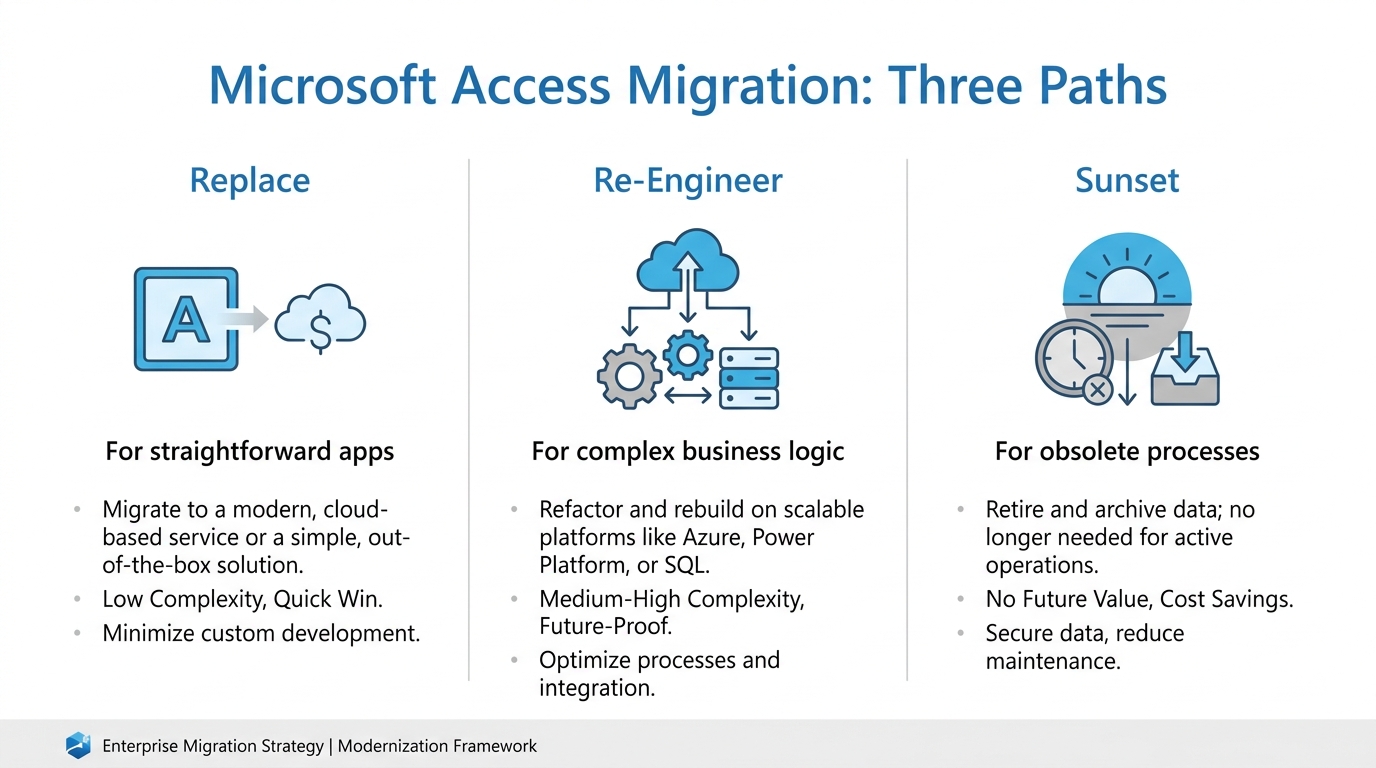
Three Paths — and Why Two of Them Keep Failing
Most Access modernization projects collapse into a false binary: replace the database entirely or leave it alone and absorb the compliance risk. Both paths create resistance. Full replacement triggers legitimate concerns about disruption. The “leave it” path accumulates the compounding cost of deferred compliance exposure and keeps IT managing risk it did not create.
The third path — selectively absorbing the high-value logic of an Access application into a governed enterprise platform — breaks the impasse, because it changes what the department is being asked to do. Instead of surrendering something, they are contributing what they know to a system that can actually protect it.
A workable triage separates Access applications into three types: those complex enough to re-engineer on a governed platform, those simple enough to replace outright, and those where the logic is so historically tangled it needs to be retired alongside a process redesign. The governance failure in most legacy modernization projects is skipping this triage and treating all three as the same problem. CloudApper is built for the re-engineer category: applications where the business logic matters enough to preserve, but Access can no longer meet the organization’s compliance or operational requirements.
Getting to a Steering Committee Yes
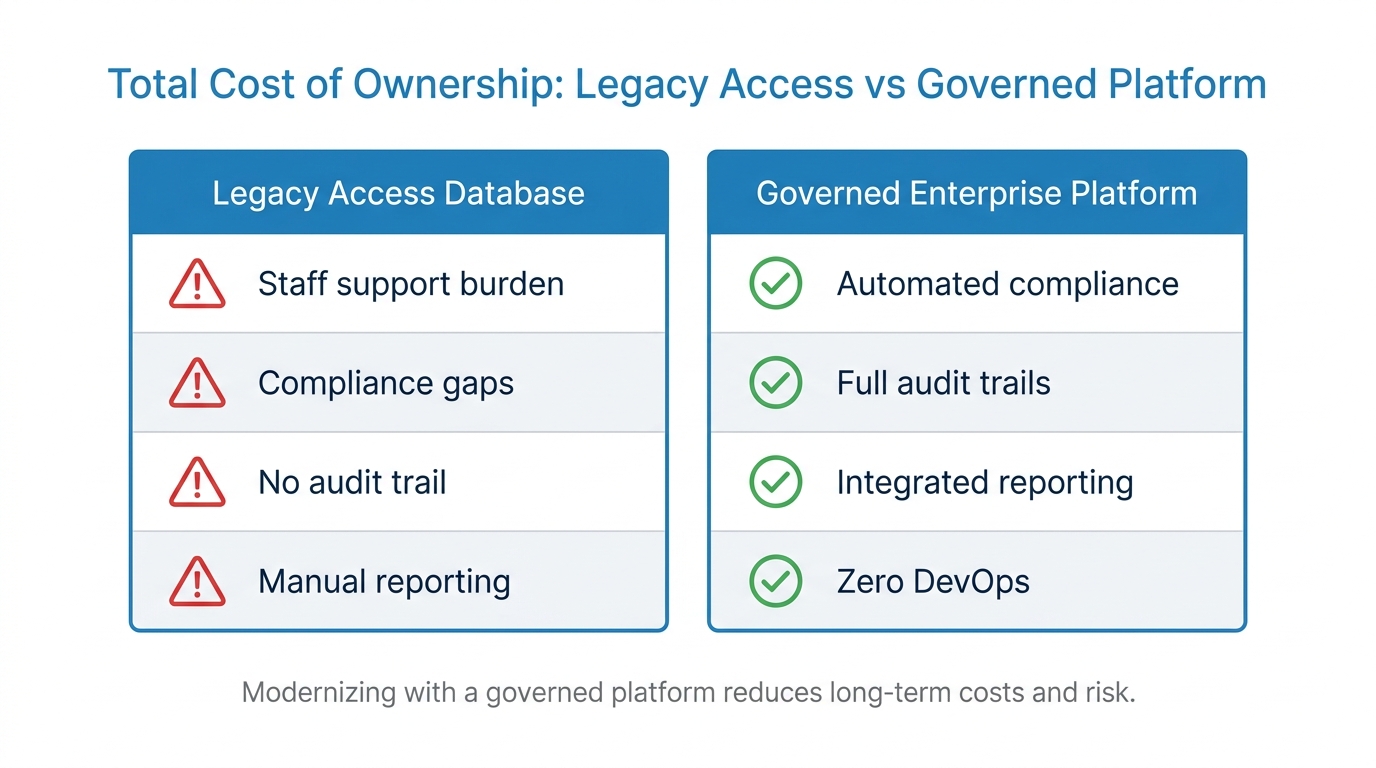
What moves an Access replacement project from IT’s backlog to steering committee approval is a TCO argument that includes process debt — not just licensing and maintenance. That means quantifying what it costs to have senior operations staff serving as informal support for a database application, what it costs to exclude that data from enterprise reporting, and what the compliance exposure looks like if the organization needs audit trails the application was never designed to generate.
The cost comparison between maintaining a legacy system and investing in modernization almost always favors modernization when these factors are fully accounted for. CloudApper changes the framing by presenting migration as a compliance and capability investment — with the architectural documentation a steering committee needs to approve it.
The Access database stays until someone gives the department that owns it a reason to let go. The right governed platform gives them that reason.
If your organization has Access databases that have outgrown the environment they were built in, CloudApper can help you assess the migration path, capture the business logic that matters, and move to a governed enterprise application without a full custom rebuild. Talk to the CloudApper team.

What is CloudApper AI Platform?
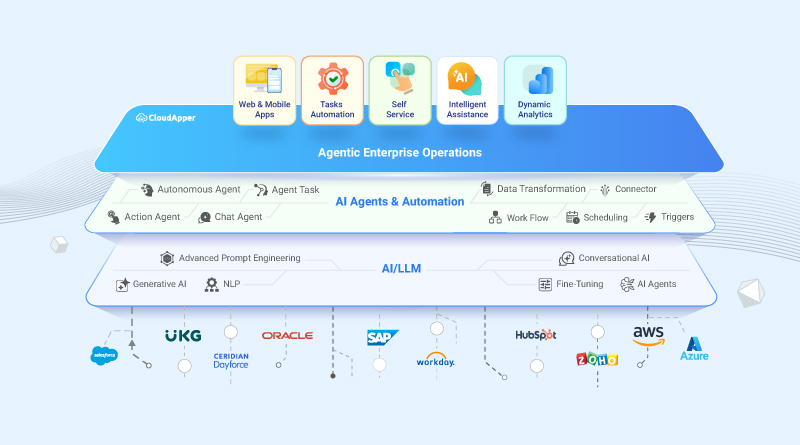
CloudApper AI is an advanced platform that enables organizations to integrate AI into their existing enterprise systems effortlessly, without the need for technical expertise, costly development, or upgrading the underlying infrastructure. By transforming legacy systems into AI-capable solutions, CloudApper allows companies to harness the power of Generative AI quickly and efficiently. This approach has been successfully implemented with leading systems like UKG, Workday, Oracle, Paradox, Amazon AWS Bedrock and can be applied across various industries, helping businesses enhance productivity, automate processes, and gain deeper insights without the usual complexities. With CloudApper AI, you can start experiencing the transformative benefits of AI today. Learn More
- Useful Links:
- Agentic AI
- No-Code/Low-Code
- Custom Software
- HCM Personalization
- iPaaS
- FedRAMP
CloudApper AI Solutions

- Works with







- and more.
Similar Posts
When the ISV Disappears: Managing an Orphaned Windows Application With…

Crystal Reports and SSRS: The Reporting Layer Nobody Budgeted for…