When IT declares a legacy application untouchable, it isn't stable. It's a contingent liability. Here's what every CIO needs to understand about the governance and compliance risk that quietly compounds inside a change freeze.
TL;DR
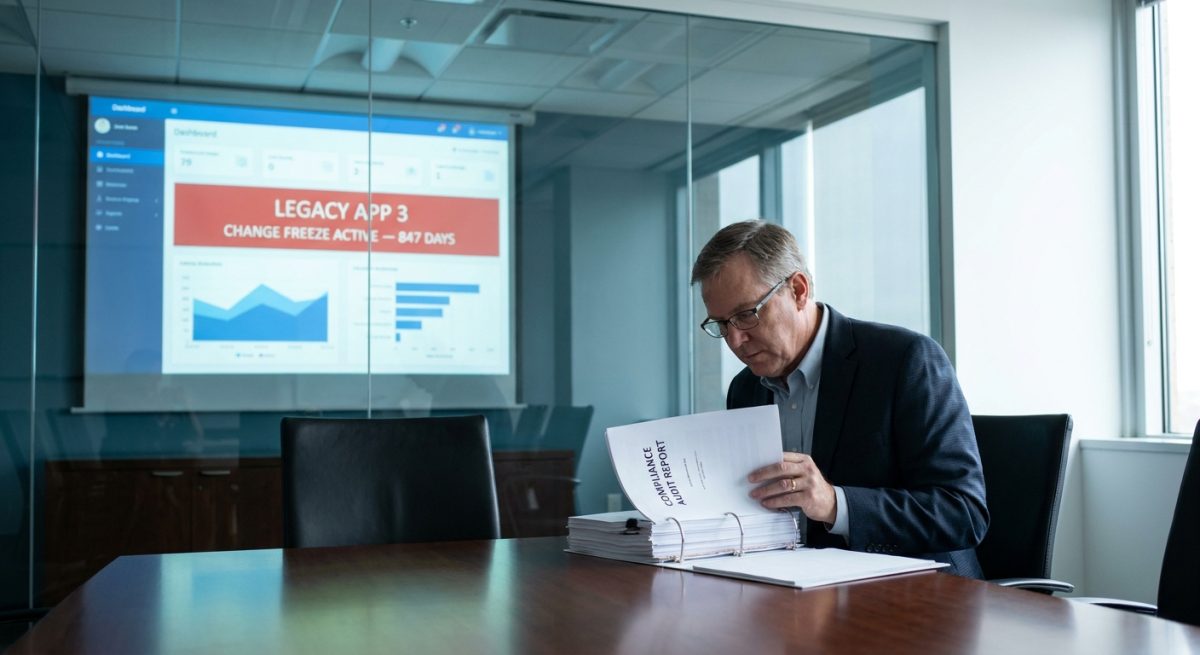
When an enterprise IT team declares a legacy application in change freeze, the instinct is to treat it as stable. It isn't. A frozen application is one nobody is confident enough to touch, and that distinction carries serious compliance, security, and governance implications. Once documented, a change freeze becomes part of the control environment auditors must test, and risk acceptance forms without review dates or accountable owners are not compensating controls. CloudApper helps enterprises extract frozen business logic onto a governed platform, incrementally, without the compliance exposure of a full cutover.
Table of Contents
Somewhere in your organization, there is a risk acceptance form with a signature on it. It was filed two or three years ago, maybe longer. It says a specific application is too brittle to modify safely and that IT has accepted this condition as the operating baseline. The form was approved. Filed. And unless your auditors go looking for it, nobody has thought about it since.

That document is not a control. It is an admission—and one that grows more consequential every quarter it sits untouched. When an enterprise IT team declares a legacy application in change freeze, the instinct is to treat that decision as prudent risk management. What actually happens is the opposite: the organization stops paying the cost of change and starts accumulating a different kind of liability—one that doesn’t appear on any balance sheet but surfaces eventually as a compliance finding, a failed security patch, or a forced replacement under the worst possible conditions.
CloudApper works with enterprises managing legacy application estates, and the pattern is consistent: the frozen application is never as stable as the freeze implies. It is an application nobody is confident enough to touch, which is a meaningfully different condition.
What the Freeze Is Actually Documenting
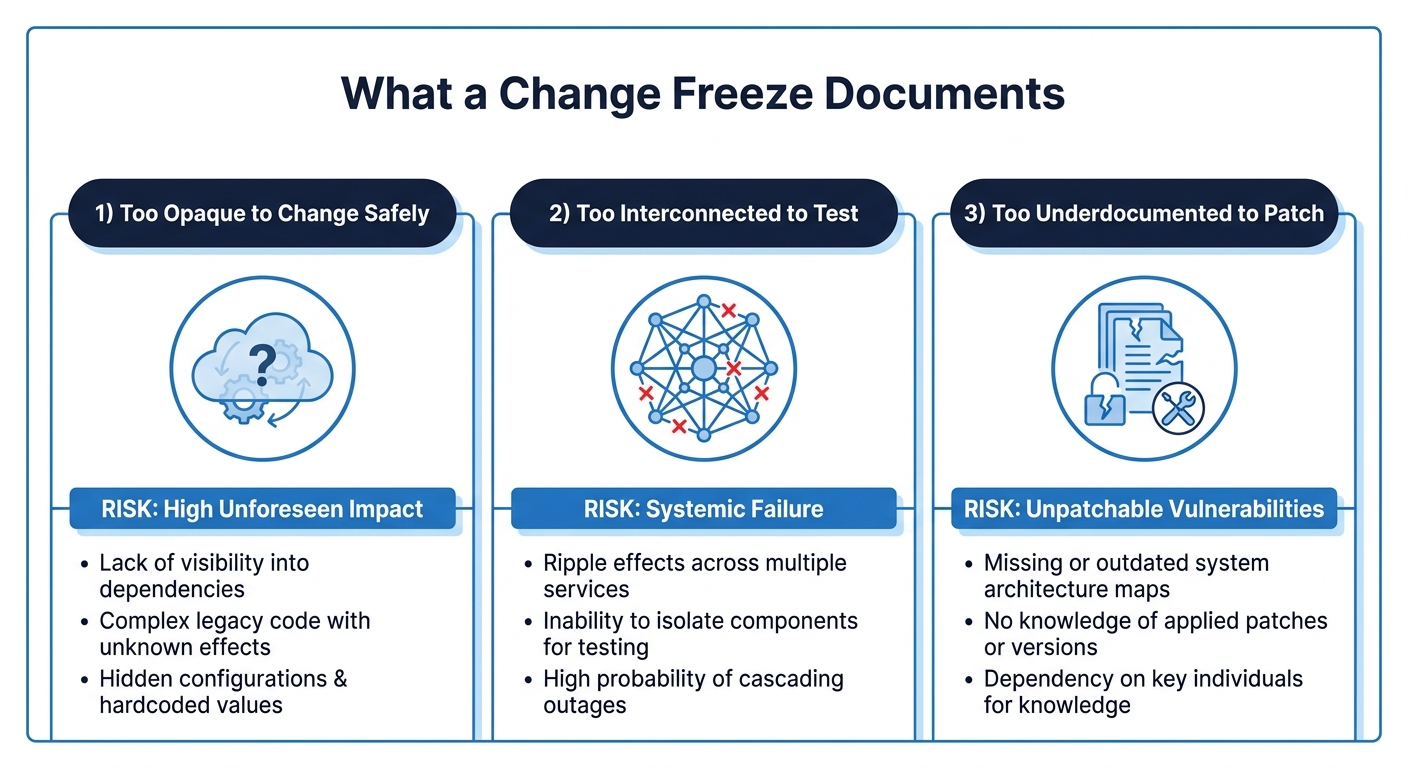
A change freeze is an acknowledgment that the system has become too opaque, too interconnected, or too underdocumented to change safely. The dependency graph of a frozen application almost always expands the moment you actually map it—what looks like a contained system is usually woven into five or six other workflows that no single person understands end to end.
That opacity is the risk. When an application cannot be patched, it cannot receive security updates; when it cannot be modified, it cannot accommodate regulatory changes. The documentation problem with legacy application patching is how a temporary freeze becomes a permanent operating condition, and how a compensating control becomes the only control.
The Auditor’s Perspective You Are Not Accounting For
The change freeze is not just an internal IT decision. Once documented, it becomes part of your control environment—one auditors and regulators are required to test. HIPAA, SOC 2, PCI DSS, and FIPS 140-2 frameworks require that compensating controls be formally documented, periodically reviewed, and demonstrably effective. A risk acceptance form from two years ago with no review date is not a compensating control. It is evidence of a known risk accepted without ongoing governance.
What the compliance exception log on a frozen legacy system actually contains tends to look very different from what the original risk acceptance described. The exception that covered one unpatched vulnerability now silently covers a wider category of exposures. Every quarter the freeze holds, the enterprise writes a larger implicit liability—one that doesn’t appear in the IT budget but will appear in the next audit finding.
What Governance of a Frozen System Actually Requires
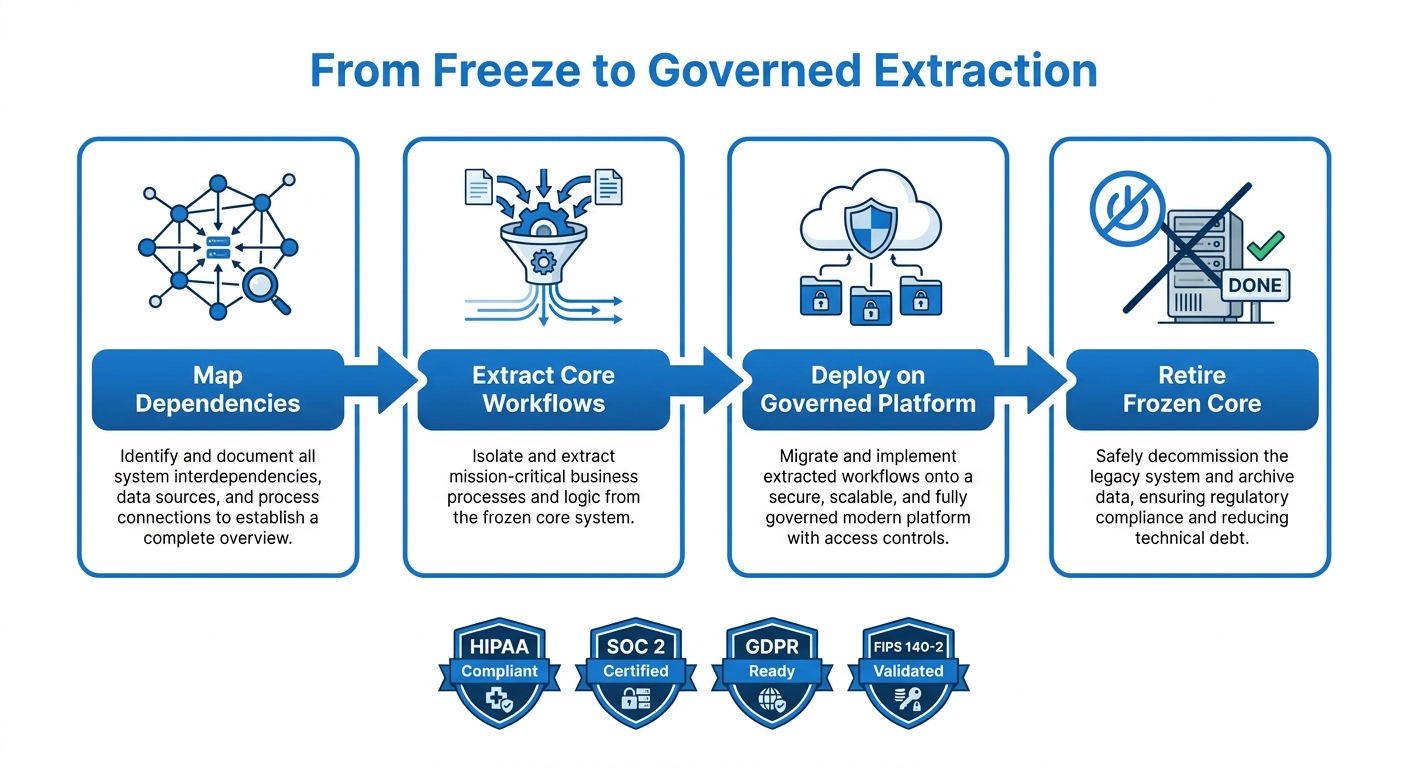
The answer CIOs often reach for is full replacement, which creates its own risk. The compliance gap that opens when both systems run in parallel is frequently underestimated—dual governance, dual data, and a migration window that stretches for months while both environments accumulate drift.
The more durable path is incremental extraction: pulling specific functions out of the frozen system into a governed environment where they can be modified, tested, and deployed without touching the core. CloudApper’s AI platform is built around this pattern—allowing enterprises to reconstruct specific workflows on a platform that carries HIPAA, SOC 2, GDPR, and FIPS 140-2 compliance inheritance by design, while leaving the frozen core in place until extraction is complete. The institutional knowledge embedded in a frozen system is finite, and the team that understood it will not always be there.
A change freeze should carry a review date, an accountable owner, and documented compensating controls tested on a defined schedule. Without those elements, it is a deferred decision with an accumulating cost. The real cost comparison between maintaining a frozen system and investing in modernization almost always shifts once compliance remediation, emergency patching cycles, and the cost of workarounds are factored in. The change freeze does not need to be permanent. It needs to be owned.
CloudApper helps enterprise IT teams assess legacy application estates, extract frozen business logic onto a governed AI platform, and establish the audit trail that compliance reviews require. If a frozen application in your environment has been sitting untouched for more than 12 months, it may be time to understand what that silence is actually costing. Talk to the CloudApper team.

What is CloudApper AI Platform?
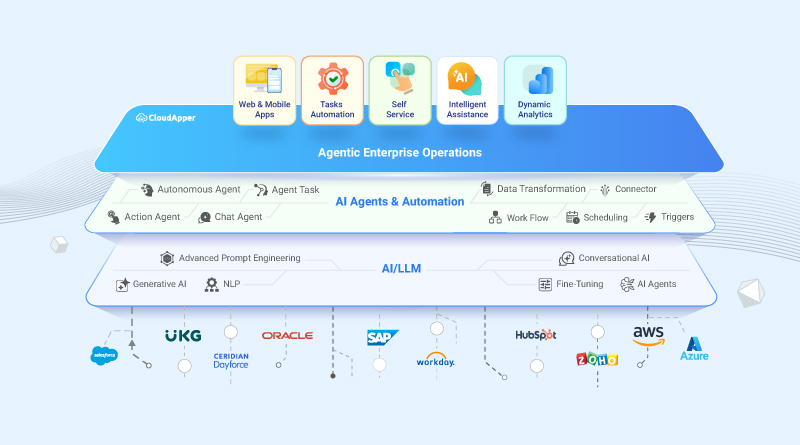
CloudApper AI is an advanced platform that enables organizations to integrate AI into their existing enterprise systems effortlessly, without the need for technical expertise, costly development, or upgrading the underlying infrastructure. By transforming legacy systems into AI-capable solutions, CloudApper allows companies to harness the power of Generative AI quickly and efficiently. This approach has been successfully implemented with leading systems like UKG, Workday, Oracle, Paradox, Amazon AWS Bedrock and can be applied across various industries, helping businesses enhance productivity, automate processes, and gain deeper insights without the usual complexities. With CloudApper AI, you can start experiencing the transformative benefits of AI today. Learn More
- Useful Links:
- Agentic AI
- No-Code/Low-Code
- Custom Software
- HCM Personalization
- iPaaS
- FedRAMP
CloudApper AI Solutions
- Works with







- and more.
Similar Posts

Microsoft Access Modernization: Why the Technical Migration Is the Easy…

When the ISV Disappears: Managing an Orphaned Windows Application With…