When an internally built pharma application enters GxP scope, the development history becomes retrospective validation evidence. Every change after go-live is a new validation event. Here is what pharma IT leaders need to know about the evidence accumulation burden before it outpaces their team's capacity to manage it.

TL;DR
Internally built enterprise applications in pharma, biotech, and medical device environments carry the highest GxP validation burden under GAMP 5, and that burden does not end at go-live. Every subsequent change to a validated application is a validation event requiring documented evidence. Organizations that build on governed AI platforms like CloudApper AI inherit change records, audit trails, and access documentation as platform outputs, changing the ratio of validation evidence to validation headcount without eliminating the compliance obligation itself.
Table of Contents
Three months into development, a quality team member asks a simple question: does this application create, modify, or store GxP records? If the answer is yes, every sprint ticket, design decision, and requirements discussion that came before that moment is now retrospective validation evidence. Evidence that was not produced to validation standards.

That question arrives at a predictable point in pharma, biotech, and medical device IT projects. The application exists. Business users are satisfied with it. The team considers it nearly finished. Then GxP scope catches up to it, and the project changes character entirely.
This is not a rare edge case. It is the standard trajectory for internally built applications in regulated environments, and the compliance cost compounds well beyond what most IT leaders scope at the start.
What GxP Scope Actually Means for Custom-Built Applications
Under FDA 21 CFR Part 11 and the GAMP 5 framework, regulated organizations bear full validation responsibility for any computerized system that creates, processes, stores, or transmits electronic records tied to GxP-regulated activities. That obligation does not transfer to a vendor, a platform, or a cloud provider. It remains with the regulated organization. When the application was built internally, that responsibility extends to the development process itself.
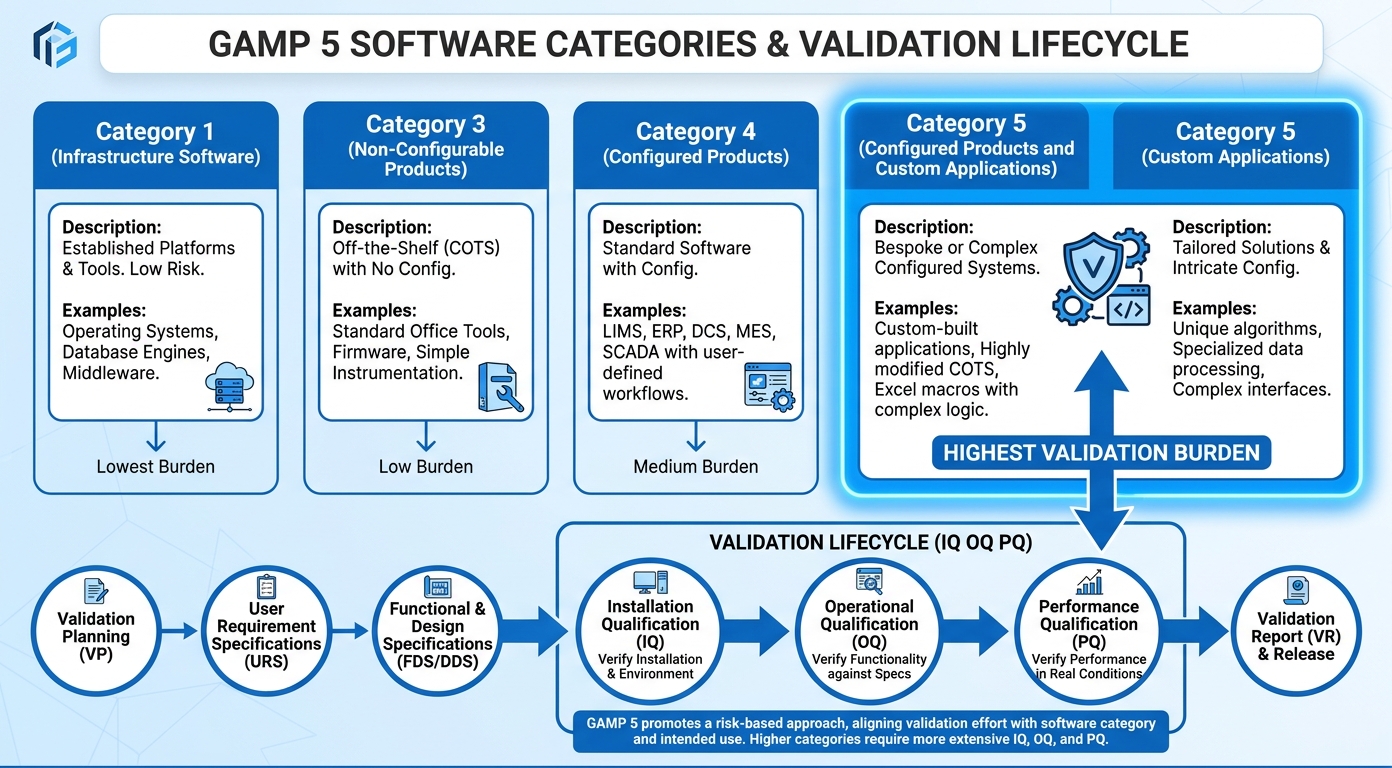
For internally developed applications, GAMP 5 classifies them as Category 5 software. Category 5 carries the highest validation burden in the framework. Organizations must document requirements, traceability, design decisions, and test execution to validation standards. Evidence that was not produced during development must be reconstructed after the fact, and reconstruction under audit scrutiny rarely holds.
Teams evaluating governed AI platforms like CloudApper AI for regulated development environments start with this question precisely because the development process itself determines whether the evidence package exists or must be manufactured. A director of IT who describes the application requirements to CloudApper AI and builds on a governed platform inherits an audit trail, change records, and access documentation as platform-level outputs. Those artifacts exist at the time of the build, not as a documentation catch-up exercise. That distinction is explored further in FDA 21 CFR Part 11 requirements for AI-assisted application development, which addresses the compliance surface AI tools create when they participate in the build.
The Evidence Package Nobody Scoped
The initial validation work is the cost pharma IT teams anticipate. User requirements specifications, installation qualification, operational qualification — these are familiar. What teams consistently underestimate is the ongoing evidence obligation that follows every subsequent change.
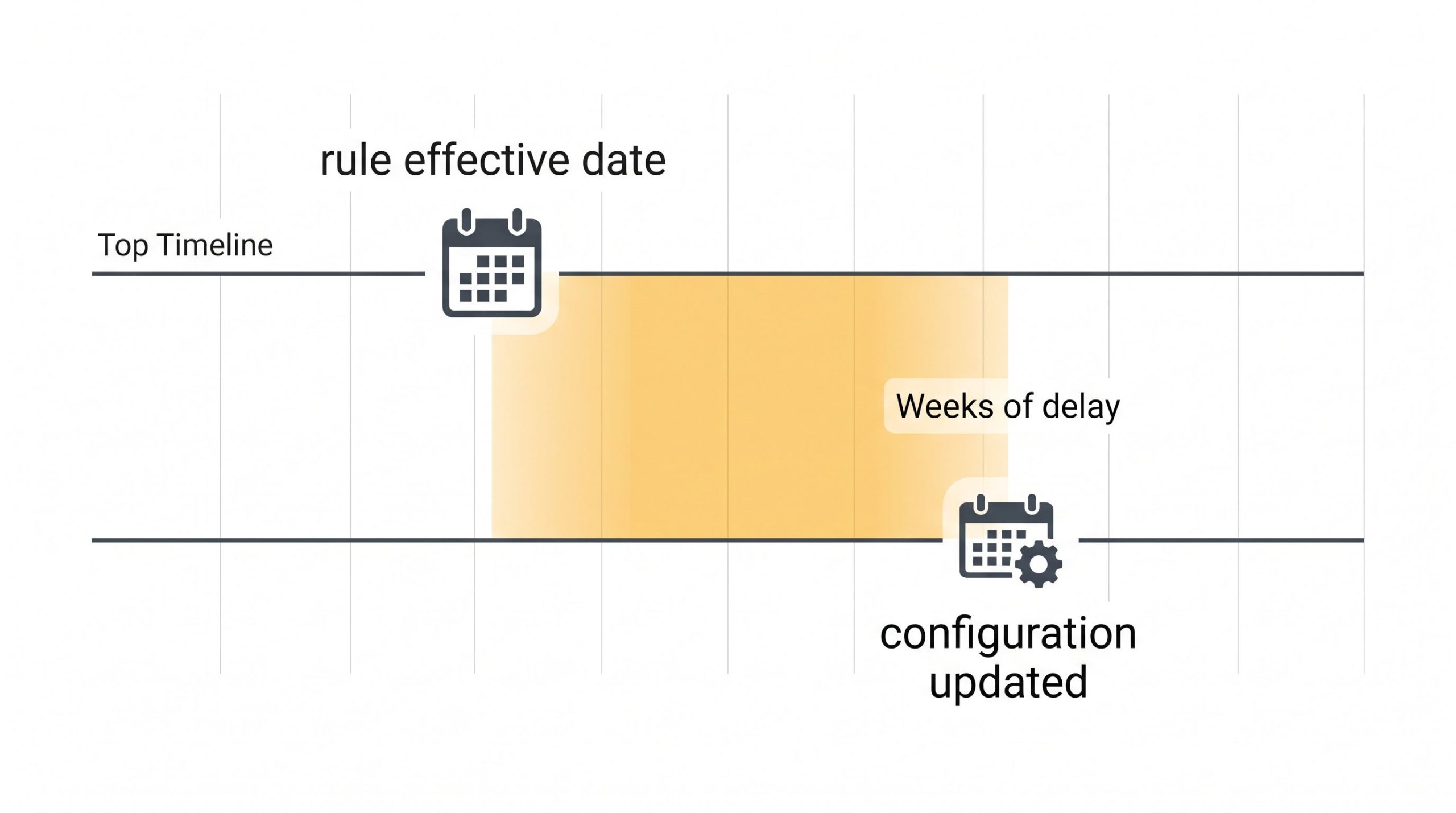
Each configuration update, field addition, integration change, or schema modification to a validated internal application is a validation event. It requires change control documentation, an impact assessment, and in many cases regression qualification. For organizations where business teams operate as informal software developers, those changes arrive through channels that bypass IT’s change control intake entirely.
This is where validation debt accumulates faster than any organization plans for. A mid-size pharma company running fifteen internally built GxP-relevant applications can generate several hundred change-control-triggering events annually. Each requires evidence. The team staffed to support the initial validation was not sized for ongoing evidence maintenance at that volume. The compliance evidence trap in application decommissioning is an endpoint version of the same problem: gaps that accumulated through the application lifecycle become liabilities at retirement.
The Stakeholder Nobody Holds Accountable
The missing party in most internally built application projects is the business-unit sponsor. They defined the scope, approved the timeline, and generated the original requirements. They also generated every change request that came after go-live — modifications routed through informal channels because the application is operational and operational needs do not wait for formal intake cycles.
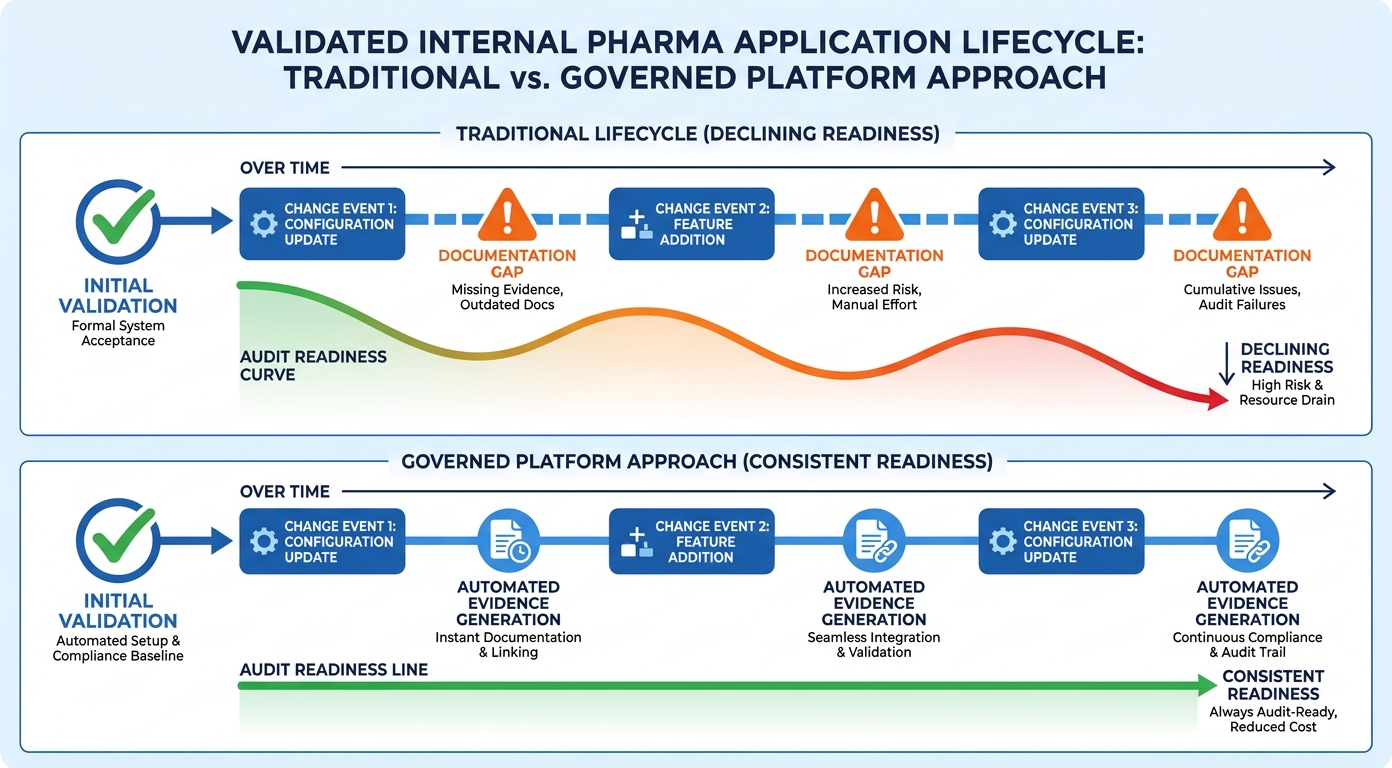
An application that was fully validated at release can be out of validated state within six months from undocumented configuration changes. This is not a quality team failure. It is a governance model failure, and it scales predictably as the internal application portfolio grows. The shadow IT problem in AI-assisted development is the same pattern at the development stage; the validation gap is that pattern at the maintenance stage.
How a Governed Platform Changes the Evidence Economics
The validation evidence obligation does not disappear with a governed platform. What changes is who produces the evidence and when. On a governed AI development platform, change records, audit trails, and access control documentation are platform-level outputs generated at the time of each change. The evidence exists because the architecture produces it, not because a validation engineer reconstructed it after a regulatory inquiry.
A pharma IT leader who needs to expand an internal application portfolio without proportionally expanding the validation team has one path to that outcome: a platform that makes evidence generation a standard function of the development and change process. What governed development looks like in practice addresses the architectural requirements for that model. The distinction is the same one that separates organizations that pass validation audits from those that reconstruct evidence for them.
When IT leaders at pharma organizations describe their application requirements to CloudApper AI, the governed platform handles the change control architecture by design. The QA team still reviews impact assessments. The business sponsor still generates change requests. The evidence gap that typically opens between those two activities closes because the platform logs the change at the point it occurs.
For pharma, biotech, and medical device IT leaders managing GxP-relevant internal applications, the validation evidence problem does not resolve through added headcount. It resolves through the development model. If your organization is evaluating governed platforms for regulated internal application development, CloudApper’s team can walk through what this looks like for your environment.

What is CloudApper AI Platform?
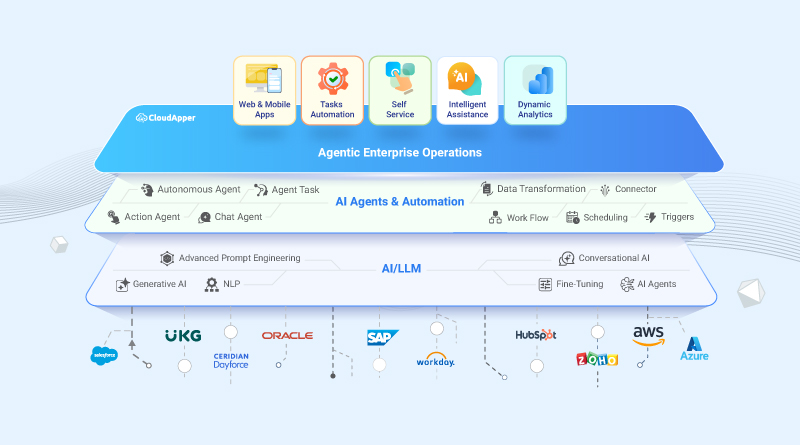
CloudApper AI is an advanced platform that enables organizations to integrate AI into their existing enterprise systems effortlessly, without the need for technical expertise, costly development, or upgrading the underlying infrastructure. By transforming legacy systems into AI-capable solutions, CloudApper allows companies to harness the power of Generative AI quickly and efficiently. This approach has been successfully implemented with leading systems like UKG, Workday, Oracle, Paradox, Amazon AWS Bedrock and can be applied across various industries, helping businesses enhance productivity, automate processes, and gain deeper insights without the usual complexities. With CloudApper AI, you can start experiencing the transformative benefits of AI today. Learn More
- Useful Links:
- Agentic AI
- No-Code/Low-Code
- Custom Software
- HCM Personalization
- iPaaS
- FedRAMP
CloudApper AI Solutions


- Works with







- and more.
Similar Posts

NIST AI RMF and Internally Built Enterprise Applications: The Evidence…

When VDI Becomes the Compliance Gap: What Auditors Find When…