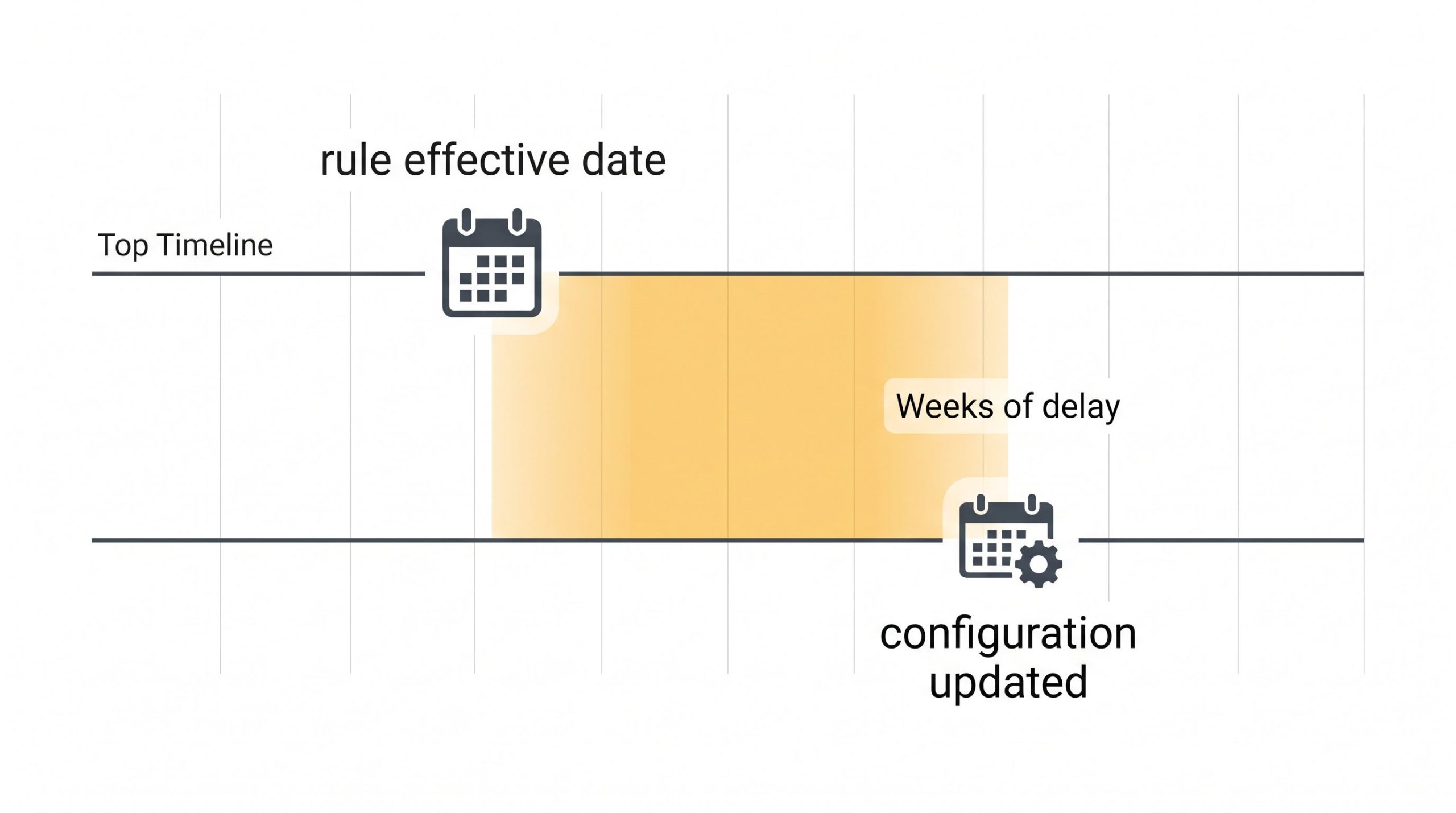
Most enterprises that have declared NIST AI RMF alignment have a complete Govern layer and empty Map, Measure, and Manage documentation for their internally built AI applications. This article explains why the evidence obligation belongs to the application team and what a governed platform does differently.

TL;DR
When an enterprise declares NIST AI RMF alignment, the policy lives in the CISO's governance program -- but the evidence obligations for Map, Measure, and Manage land on the application teams that built the AI systems. Most internally built enterprise applications using routing logic, exception flagging, or eligibility scoring qualify as AI systems under the framework but have no documentation to show for it. Retroactive evidence production is expensive and structurally identical to the SOX ITGC and GxP validation problems. A governed platform like CloudApper AI produces Map, Measure, and Manage artifacts as structural outputs of the build process -- not a separate compliance project that follows it.
Table of Contents
Three weeks before release, a governance team member asks the application team a straightforward question: “Where is the NIST AI RMF artifact package for this system?” The team has been building for four months. Tests passed. Code reviewed. Deployment environment ready. Nobody told them they also owed a risk characterization, a testing measurement record, and a monitored response plan organized under four framework functions.

The policy is real. The organization declared NIST AI RMF alignment six months ago at the board level. But that declaration lived in the CISO’s governance program and never arrived in the application team’s sprint. The artifact the governance office is asking for doesn’t exist — not because the team made a mistake, but because nobody connected the organizational policy to the team-level obligation. That structural gap is where most enterprise NIST AI RMF programs are right now.
CloudApper AI is built on the premise that governance evidence and application development are the same process. But before that matters, the gap itself has to be understood.
This Applies to More Applications Than Most Teams Think
NIST’s AI Risk Management Framework covers any AI system that makes inferences, generates outputs, or influences decisions using machine learning or related techniques. That definition does not require a large language model. It covers the exception-flagging logic embedded in a logistics workflow, the eligibility routing engine in an HR application, the demand variance detector in a supply chain dashboard, the risk-scoring module in a financial services intake form.
Most enterprises have built several of these systems in the past three years. Most of those systems have never been characterized as AI systems for governance purposes. Just as SR 11-7 in financial services surfaced embedded decision logic as models requiring validation, NIST AI RMF applies the same exposure logic across every industry. The framework is voluntary — not a universal legal mandate. But voluntary adoption at the organizational level creates implementation obligations at the application level that are not confined to what the policy document says.
Govern Belongs to the CISO. Map, Measure, and Manage Belong to the Application Team.
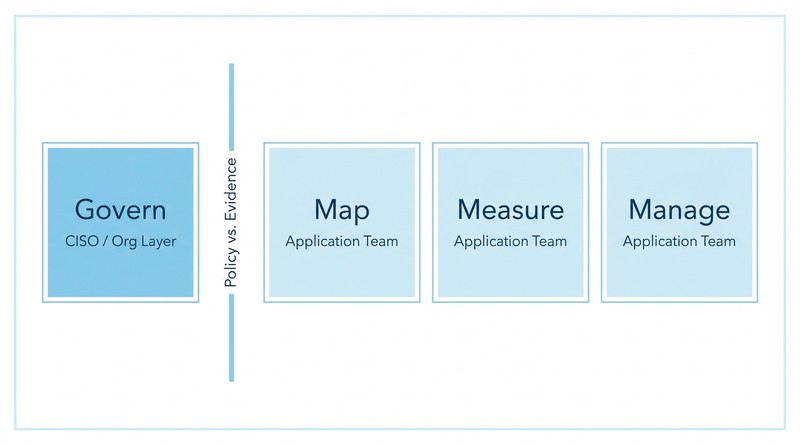
The four core NIST AI RMF functions operate at different organizational levels. Govern is the organizational layer: policies, accountability structures, declared risk tolerances, framework alignment documentation. The CISO’s organization owns Govern. That work is done when the policy is written and the board has reviewed it.
Map, Measure, and Manage operate at the system level. Map characterizes what the specific AI system does, who it affects, and what risks apply to it. Measure produces testing and evaluation records — accuracy thresholds, performance baselines, bias or drift assessment results. Manage documents the controls in place, the risk decisions made during development, and the monitoring plan that will catch degradation after deployment.
These three functions require artifacts only the application team can produce. The CISO cannot write the Map characterization for a routing engine the operations team built. The policy layer cannot generate testing records that were never captured during development. The governance team cannot establish a monitoring plan for a system they did not deploy. Organizations that have strong Govern documentation and empty Map, Measure, and Manage layers for their internally built systems are not unusual. That split is the norm — and it is where the exposure lives.
The Cost of Producing This Evidence After the Fact
Reconstructing Map, Measure, and Manage documentation for a system that has been in production for a year is expensive. Intended use statements require recovering decisions made in scoping conversations that were never documented formally. Risk characterizations require identifying the decision population — who the system affects and in what contexts — from a design phase that predated the governance framework. Testing records either need to be regenerated or acknowledged as absent, which creates its own audit exposure.
This pattern is not new. The SOX ITGC evidence problem for internally built financial applications, the GxP validation burden for pharma applications that entered regulatory scope after go-live, and the ISO 27001:2022 application security gap each follow the same economic structure: the evidence obligation existed from the beginning; the cost of satisfying it grows with every month it went unmet.
NIST AI RMF creates the same compounding liability for internally built AI applications. The board-level AI governance question the CIO was asked to answer with policy is generating a system-level evidence question the application team was never asked to prepare for.
What It Looks Like When the Platform Produces the Evidence
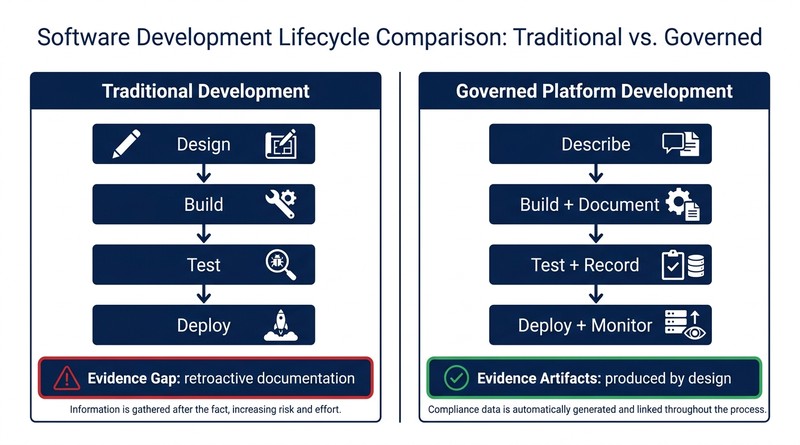
When a director of IT describes what they need in CloudApper AI, the platform builds the application and generates governance artifacts simultaneously. Change control records capture the system’s development history. Testing configuration is documented during build. Deployment records reflect the ownership structure, access boundaries, and monitoring configuration the team specified when they described the requirement.
The artifact package the governance team will eventually request — intended use, risk characterization, testing records, monitoring plan — is a platform output. Not a documentation exercise that follows development. Not a retroactive reconstruction project when the audit question arrives. Directors of IT who have used CloudApper AI to build internal applications outside the shadow AI pattern are not managing a compliance program alongside an application program. They are running one governed build process that produces both.
That is the operational difference the NIST AI RMF evidence gap makes visible.
If your organization has declared NIST AI RMF alignment and your application teams are building internal AI systems, the gap between the policy and the evidence is a scoping problem, not a paperwork problem. CloudApper AI can show you what the platform produces by design and where your current builds stand against the Map, Measure, and Manage obligations that your governance teams will eventually surface.

What is CloudApper AI Platform?
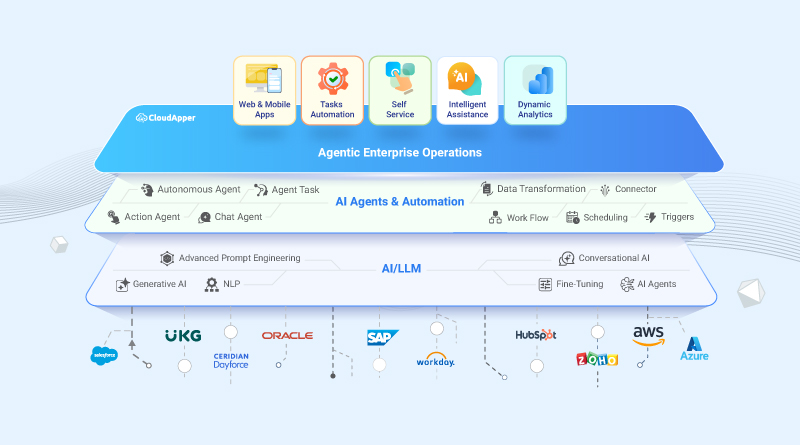
CloudApper AI is an advanced platform that enables organizations to integrate AI into their existing enterprise systems effortlessly, without the need for technical expertise, costly development, or upgrading the underlying infrastructure. By transforming legacy systems into AI-capable solutions, CloudApper allows companies to harness the power of Generative AI quickly and efficiently. This approach has been successfully implemented with leading systems like UKG, Workday, Oracle, Paradox, Amazon AWS Bedrock and can be applied across various industries, helping businesses enhance productivity, automate processes, and gain deeper insights without the usual complexities. With CloudApper AI, you can start experiencing the transformative benefits of AI today. Learn More
- Useful Links:
- Agentic AI
- No-Code/Low-Code
- Custom Software
- HCM Personalization
- iPaaS
- FedRAMP
CloudApper AI Solutions


- Works with







- and more.
Similar Posts

When an Internally Built Application Enters GxP Scope, Every Change…

When VDI Becomes the Compliance Gap: What Auditors Find When…