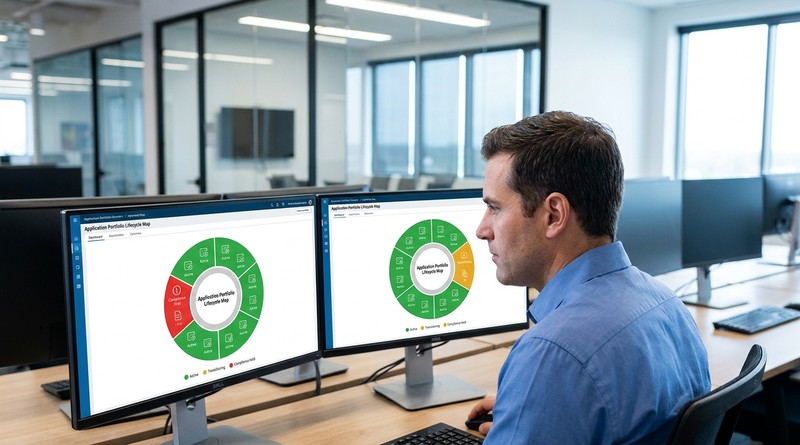
When a vendor builds your internal application using AI tools, the compliance obligation stays with your organization. Most vendor governance frameworks miss this gap entirely. Here is what enterprise IT must govern in every vendor-delivered application.

TL;DR
When a vendor or system integrator builds your internal application, your organization inherits whatever governance posture their toolchain carried -- not your own. SOC 2 certifications and BAAs cover vendor service environments, not the code they hand off. As AI coding assistants accelerate vendor delivery, enterprise IT needs to extend its governance framework into vendor build engagements before the next handoff becomes an audit finding.
Table of Contents
A director of IT at a mid-size logistics company was reviewing a vendor handoff document for a new internal operations application. The system integrator had built it over four months. The handoff was routine: sign off on functionality, confirm the documentation, close the project ticket.

Then she noticed the toolchain section.
The SI had used three AI coding assistants to accelerate delivery. Two were not on the organization’s approved software list. One had generated significant portions of the application logic. None of it had passed through the company’s internal code review process, because the code had never technically been “in house” during development. The application was already in production.
The compliance team had not been involved. Neither had security.
This is not an edge case. It is playing out in healthcare, manufacturing, and financial services organizations right now, not as a breach or an audit finding, but as a quiet gap in the application estate that most vendor application governance frameworks did not anticipate. The vendor is gone. The application is yours. And so is everything the vendor’s toolchain brought with it.
The Vendor Builds It, but You Own What Comes With It
The standard assumption when engaging an MSP, systems integrator, or consulting firm is that their SOC 2 certification or your signed BAA covers the compliance exposure. It does not, not for the application they deliver.
A SOC 2 report covers the vendor’s own service environment. It says nothing about the governance posture of the code they wrote and handed off. Once that application lives in your infrastructure, it is subject to your compliance obligations: HIPAA, SOC 2 Type II, FINRA, PCI DSS, or whichever framework governs your organization. The vendor has moved on. As organizations expand their internal application estates to fill gaps that HCM, ERP, and CRM platforms leave behind, the volume of vendor-delivered applications is growing. Each one carries the governance posture of the toolchain that built it, not the governance posture of your enterprise.
This is the aspect of enterprise AI platform vendor evaluation that most security reviews miss entirely: it focuses on what the vendor operates, not what the vendor builds and leaves behind.
When the Vendor’s AI Tools Become Your Compliance Exposure
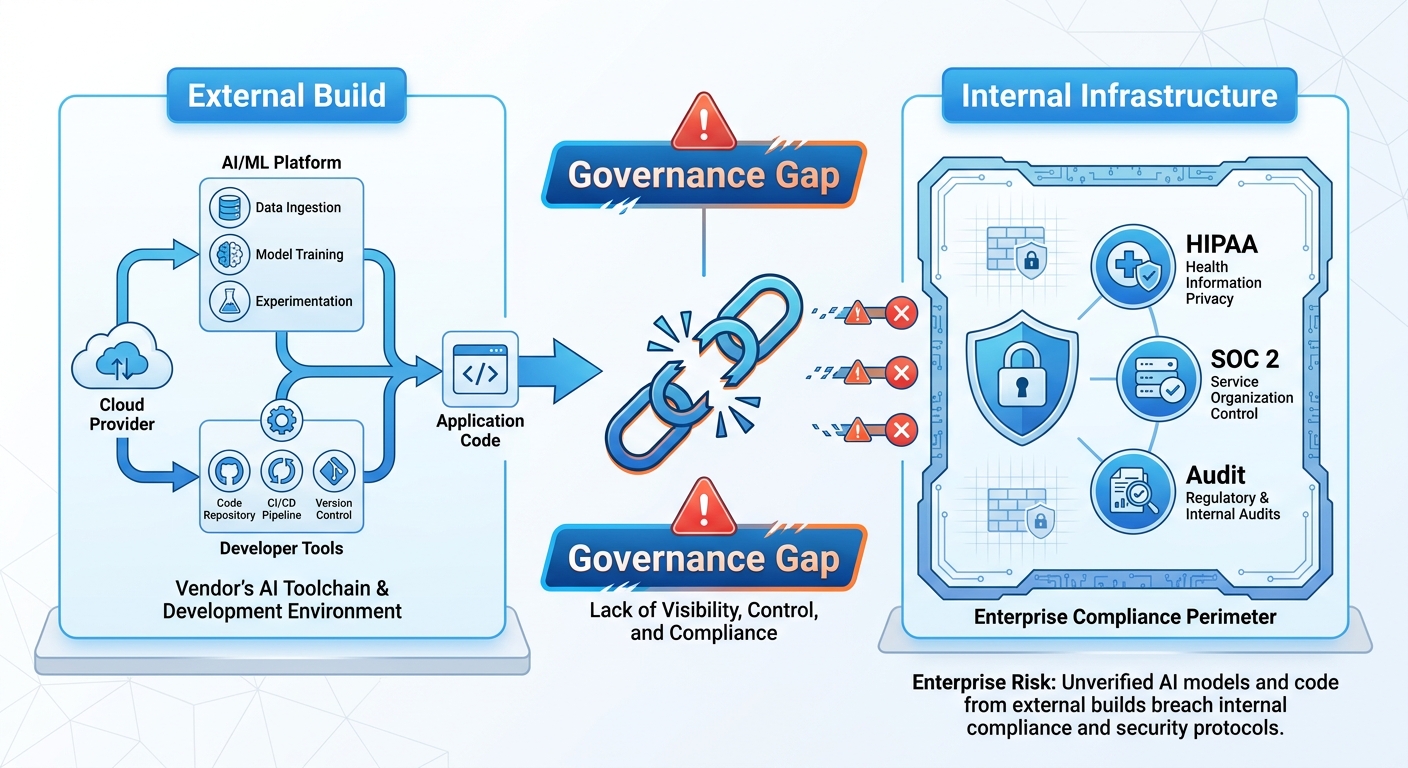
This risk has a sharper edge today. Systems integrators and development firms are using AI coding assistants and low-code platforms to accelerate delivery. The problem is that those tools often do not meet enterprise governance standards.
AI-generated code in ungoverned environments carries a documented vulnerability rate of 40 to 45 percent. When a vendor uses their own AI toolchain — one that has not passed through your security review, does not carry your audit trail, and cannot be validated against your approved software inventory — the code they deliver is exactly the kind of un-auditable artifact your internal AI governance program was designed to prevent.
The shadow AI problem enterprise IT is working to close is re-entering through the vendor delivery channel. An SI using ungoverned LLMs to build your internal application is not one of your developers using an unsanctioned tool. It is an external party building a production system with a toolchain you have never reviewed, and delivering the output into your compliance perimeter.
What Vendor Application Governance Actually Requires
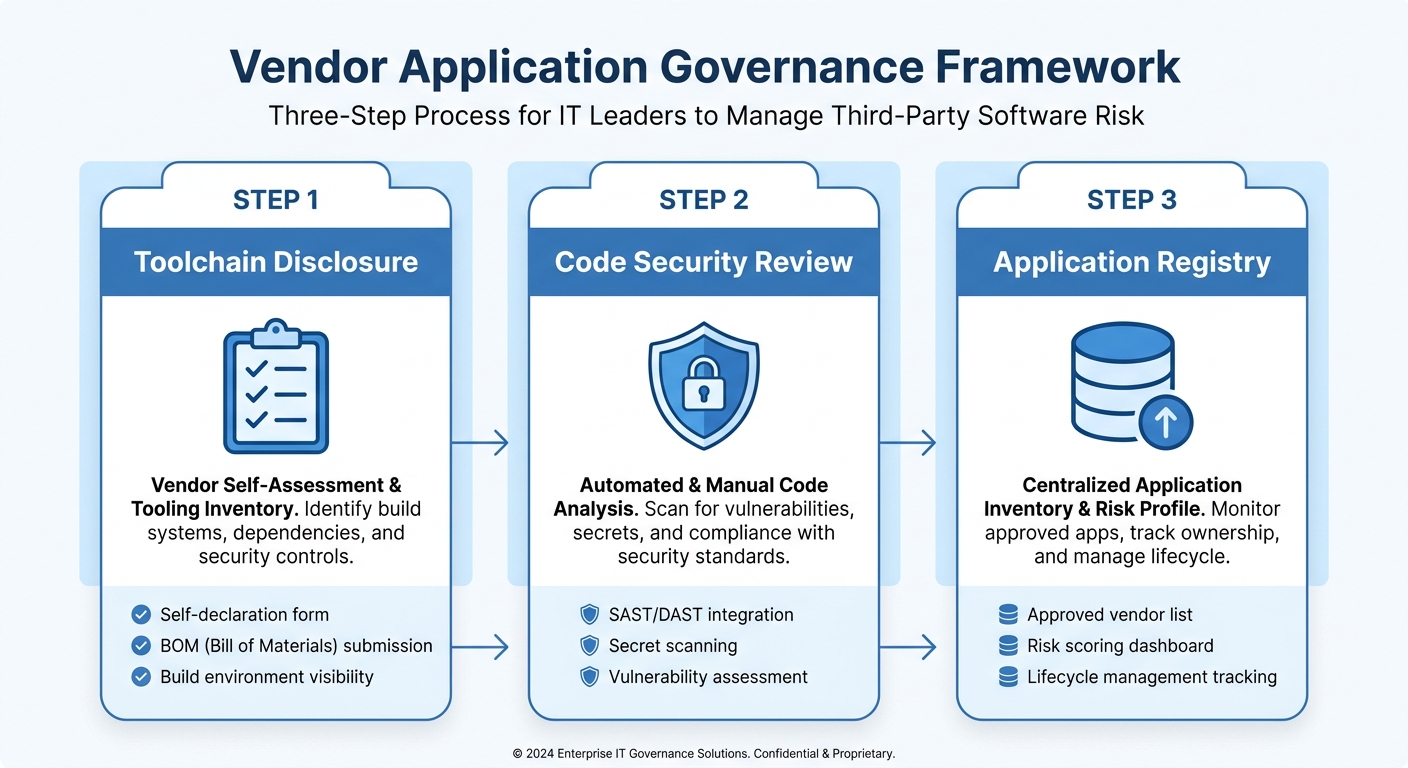
Governing vendor-built applications starts before the vendor writes a line of code. It requires three specific changes to how enterprise IT structures external build engagements.
First, vendor contracts need a toolchain disclosure clause. Before the project starts, IT should require documentation of every AI coding assistant, low-code platform, and third-party library the vendor plans to use. Any tool not on the enterprise’s approved software inventory requires a security review before it touches a project that connects to internal systems or handles protected data. Most organizations do not have this clause. Most vendors would not volunteer the information without it.
Second, vendor-delivered code needs to pass through the same code review and security scan process as internally-built code. The fact that it was built externally is not a governance exception. An enterprise AI coding governance framework applies to any code running in the enterprise environment, regardless of who wrote it or what tools they used.
Third, every vendor-delivered application needs to be registered in the enterprise application inventory from the moment it enters production, with documentation of the build toolchain, the AI tools used, the compliance requirements it touches, and the internal owner responsible for ongoing governance. An application without an assigned owner is an application that will not be remediated when a vulnerability surfaces.
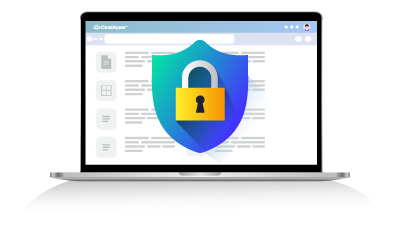
CloudApper AI addresses this on both sides of the problem. When a director of IT describes what the organization needs built, CloudApper AI delivers the application on architecture that is compliant by design: HIPAA, SOC 2, FIPS 140-2, and OWASP ZAP certified, with a full audit trail and no DevOps overhead. For organizations dealing with vendor-delivered applications that need to come under governance alignment, the cost of re-platforming vendor-built applications is significantly lower when the target environment is a governed platform than when it requires net-new development. CloudApper AI is that target: a controlled environment where those applications can be rebuilt under the enterprise’s own governance posture instead of carrying forward what the vendor’s toolchain left behind.
The compliance obligation for an internal application belongs to the organization that operates it. As vendor delivery timelines accelerate with AI tooling, the gap between what was built and what enterprise governance can account for is widening. The organizations staying ahead of this problem are the ones that extended their internal application governance frameworks into vendor build engagements before a routine review surfaced a quiet discovery that turned into an audit finding.
If your organization is evaluating how to bring vendor-built and internally-built applications under a single governed architecture, CloudApper AI provides the platform and the compliance posture to do it without a six-month project.

What is CloudApper AI Platform?
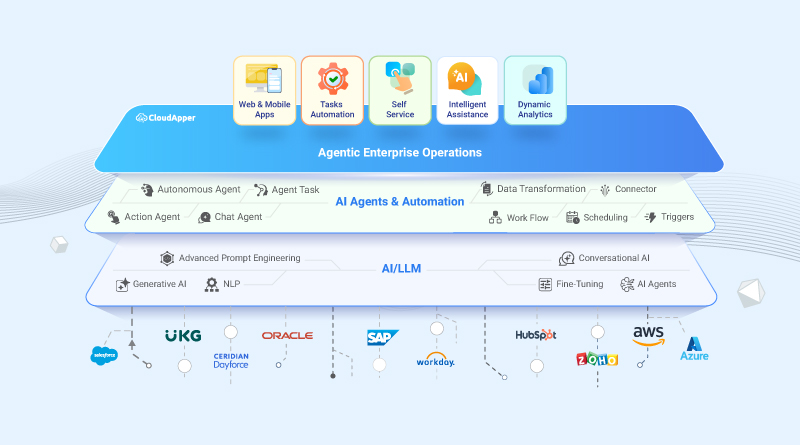
CloudApper AI is an advanced platform that enables organizations to integrate AI into their existing enterprise systems effortlessly, without the need for technical expertise, costly development, or upgrading the underlying infrastructure. By transforming legacy systems into AI-capable solutions, CloudApper allows companies to harness the power of Generative AI quickly and efficiently. This approach has been successfully implemented with leading systems like UKG, Workday, Oracle, Paradox, Amazon AWS Bedrock and can be applied across various industries, helping businesses enhance productivity, automate processes, and gain deeper insights without the usual complexities. With CloudApper AI, you can start experiencing the transformative benefits of AI today. Learn More
- Useful Links:
- Agentic AI
- No-Code/Low-Code
- Custom Software
- HCM Personalization
- iPaaS
- FedRAMP
CloudApper AI Solutions
- Works with







- and more.
Similar Posts

What Your AI Development Platform Vendor’s Security Review Should Actually…

SR 11-7 Wasn’t Written for This: AI-Assisted Internal App Development…