GDPR Article 22 applies to internally built HR and finance applications that automate consequential decisions about employees. Most enterprise teams have not mapped these workflows as Article 22 systems, leaving them without contestability mechanisms, DPIA registration, or transparent decision records.

TL;DR
GDPR Article 22 applies to internally built HR and finance applications that produce automated decisions about employees, candidates, or customers, not only to third-party AI vendor models. Most enterprise teams building workflow tools with low-code platforms have not mapped these applications as Article 22 systems, leaving them without required contestability mechanisms, DPIA registration, or transparent decision records. The risk is not deliberate circumvention but a structural gap between how quickly consequential logic gets deployed and how slowly compliance mapping follows. Governance built into the application architecture at build time is the only reliable remediation path before an audit or enforcement inquiry makes the absence visible.
Table of Contents
During a pre-audit Records of Processing Activities review, the DPO asks HR operations to list every system that produces decisions about employees. The list comes back with the HRIS, the performance management module, the payroll processor. Then someone mentions the leave routing tool the HR operations team built eight months ago, evaluating coverage ratios and tenure before deciding on each request. The question is whether anyone mapped it as a GDPR Article 22 automated decision-making system.

That is where Article 22 exposure surfaces in most enterprise environments: not in a vendor AI model that went through procurement review, but in an internal workflow a business team built and deployed without a data protection impact assessment, a contestability path, or a named reviewer with genuine override authority. CloudApper AI was designed for enterprises building these applications, embedding governance into the architecture before an audit makes the absence visible.
When an Internally Built Application Crosses the Article 22 Line
Article 22 applies when a decision is based solely on automated processing and produces a legal or similarly significant effect on a data subject. The word “solely” is where most IT teams assume they have cover. They point to the coordinator who reads the output before acting. But the EU Court of Justice’s 2023 Schufa ruling clarified that Article 22 can engage before the final decision when an automated score materially determines the outcome a human reviewer will ratify. A coordinator processing the bottom tier of a sorted queue at end-of-day, without access to the factors that produced the ranking, is not exercising meaningful review.
Leave management tools that route approvals by coverage algorithm, finance workflows that score expense reports and flag them for a queue, bonus models that rank employees by weighted criteria: none of these require a sophisticated machine learning model to attract Article 22 scrutiny. They require consequential logic and a data subject whose pay, access, or employment conditions depend on the output. The compliance gap that opens when business units build applications outside centralized IT oversight is not a security problem. It is a documentation problem. The application exists. The decisions are real. The DPIA, the processing record, and the contestability mechanism do not.
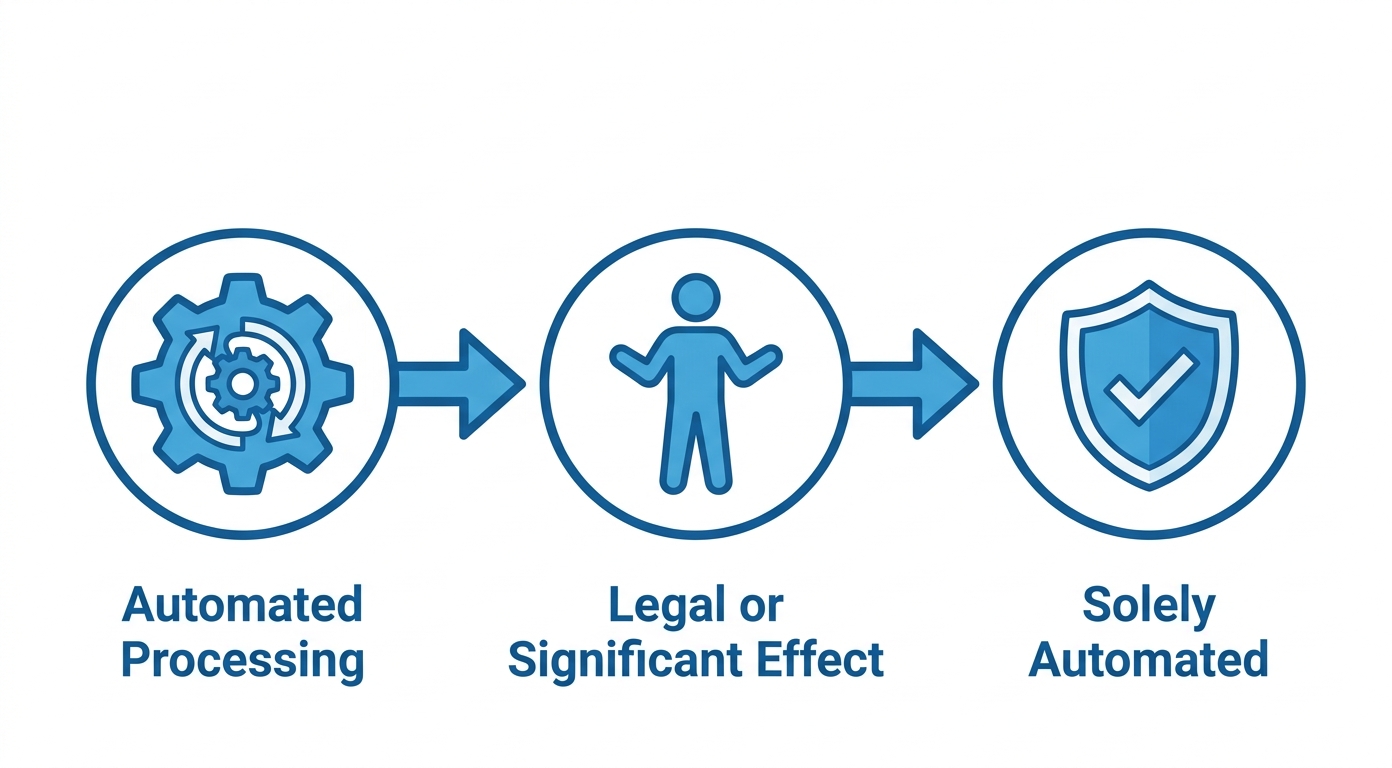
The Scale Problem Intent Cannot Solve
The teams building these applications are not circumventing GDPR deliberately. An HR operations coordinator who described a leave management need and had a functional workflow the next day did not think of it as an Article 22 system. Months later it processes hundreds of employee requests with no model documentation and no ROPA entry. When every department functions as a software vendor, the speed that makes business-led development useful is the same property that outpaces compliance registration.
What Contestability Actually Requires
Article 22 compliance requires three things built into the application: a transparent decision record showing what factors produced the result, a contestability path for the data subject to request human review, and a named reviewer with authority to actually override the output.
A director of HR compliance brought this problem to CloudApper AI: a leave management workflow with no documentation of how coverage ratio, tenure weighting, and team overlap combined into a determination. Auditors reviewing internally built applications ask not whether the application works but whether its decision logic is documented and its human controls are substantive. CloudApper AI built a governed replacement that records each decision factor, surfaces weighted inputs to the reviewing coordinator, and generates an audit-ready processing record for each submission — documentation that matched the application’s behavior because both came from the same governed build process.
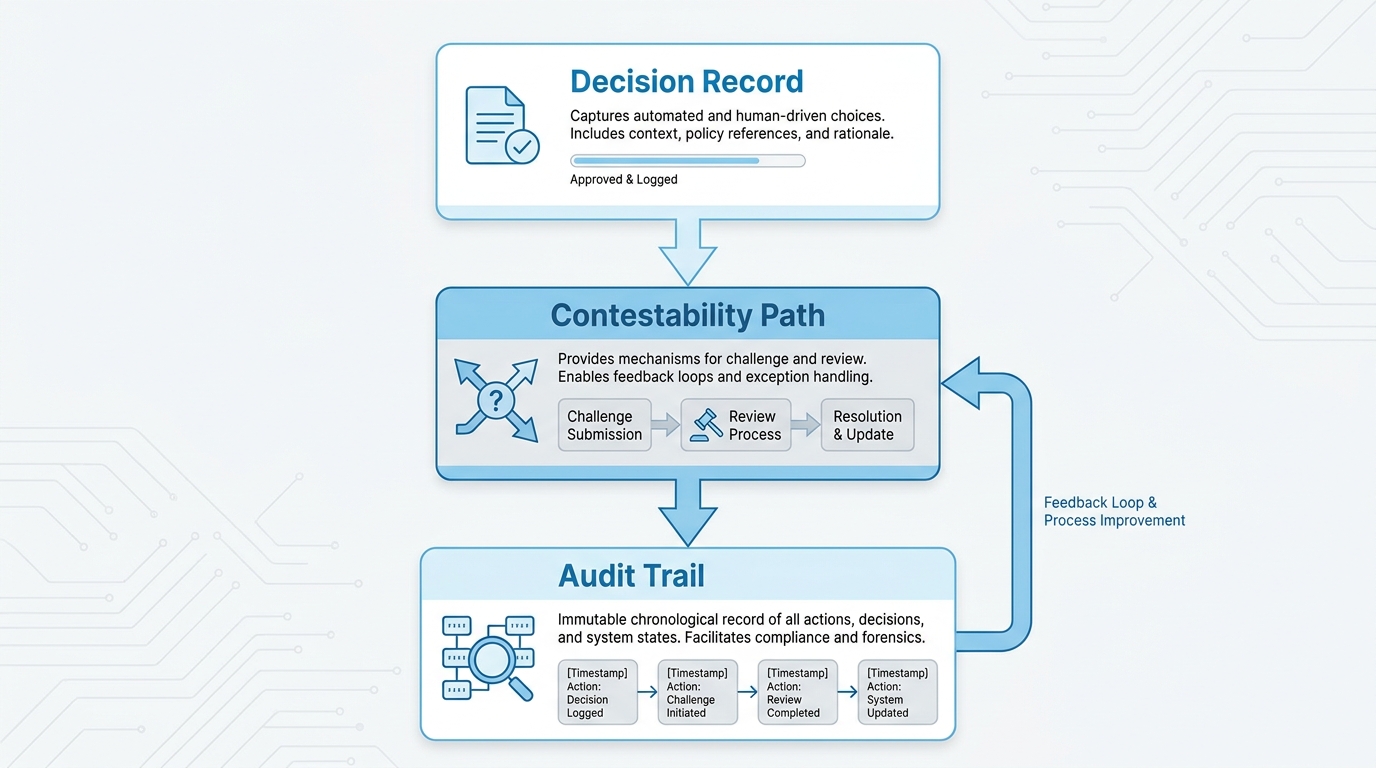
The question CIOs need to answer for their boards and compliance committees is not whether Article 22 candidates exist in the application estate. They do. The question is whether the organization can demonstrate, under a DPIA review or an enforcement inquiry, that the required controls were present at the time of each automated determination.
If your internal application estate includes HR or finance workflows that produce consequential decisions about people, CloudApper AI can help you build the governance architecture that Article 22 requires before your next audit cycle. Contact CloudApper AI to discuss what governed application development looks like for your compliance environment.

What is CloudApper AI Platform?
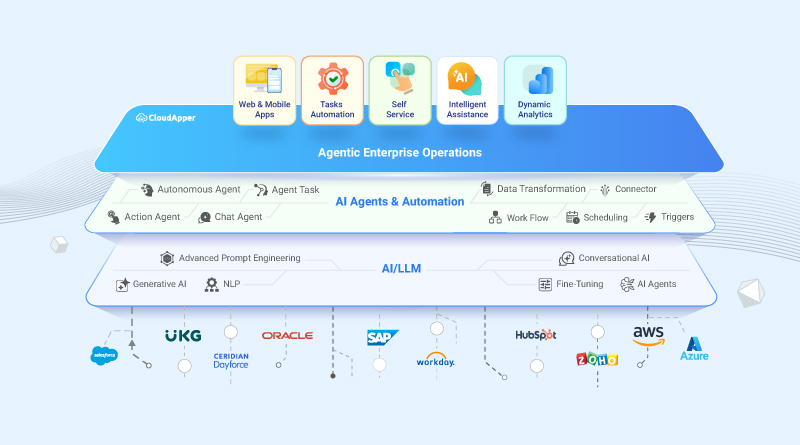
CloudApper AI is an advanced platform that enables organizations to integrate AI into their existing enterprise systems effortlessly, without the need for technical expertise, costly development, or upgrading the underlying infrastructure. By transforming legacy systems into AI-capable solutions, CloudApper allows companies to harness the power of Generative AI quickly and efficiently. This approach has been successfully implemented with leading systems like UKG, Workday, Oracle, Paradox, Amazon AWS Bedrock and can be applied across various industries, helping businesses enhance productivity, automate processes, and gain deeper insights without the usual complexities. With CloudApper AI, you can start experiencing the transformative benefits of AI today. Learn More
- Useful Links:
- Agentic AI
- No-Code/Low-Code
- Custom Software
- HCM Personalization
- iPaaS
- FedRAMP
CloudApper AI Solutions

- Works with







- and more.
Similar Posts

The Service Account Audit Nobody Runs: When AI-Built Apps Turn…

AI Agent Over-Permission: The Access Control Problem Nobody Scoped When…