Static and dynamic analysis tools were built for human-generated code patterns. When AI coding assistants contribute to production systems, the vulnerability classes they introduce may not match what SAST and DAST are calibrated to find. Here is why that gap exists and what architectural governance actually changes.

The scan passed. The test suite passed. The change management record shows both.

What neither document shows is that the vulnerability now in production arrived as a Copilot suggestion that looked like reasonable code to every review step, including the automated ones. Your static analysis tool was not looking for what it introduced, because the pattern was never in its ruleset.
This is the problem enterprise security teams are hitting after two to three years of AI-assisted development adoption. The toolchain did not change. The code generation model did. Static analysis tools like Veracode, Checkmarx, SonarQube, and Snyk were built and tuned against human-generated code patterns. Dynamic analysis tools were configured to exercise application paths developers deliberately designed. When AI coding assistants contribute code to production systems, neither category of tool is fully equipped to catch what they may have quietly introduced.
The gap is not theoretical. AI code injection vulnerabilities often look nothing like the patterns SAST rulesets were built to flag. AI assistants frequently generate over-permissioned API calls, non-deterministic output handling, and privilege escalation paths that are structurally correct but contextually dangerous. These patterns pass syntactic review because they are valid code. They pass SAST scans because the tools are not querying for the contextual logic that makes them exploitable. The vulnerability is not in what the code says but in what it does at runtime in combination with the environment it was dropped into.
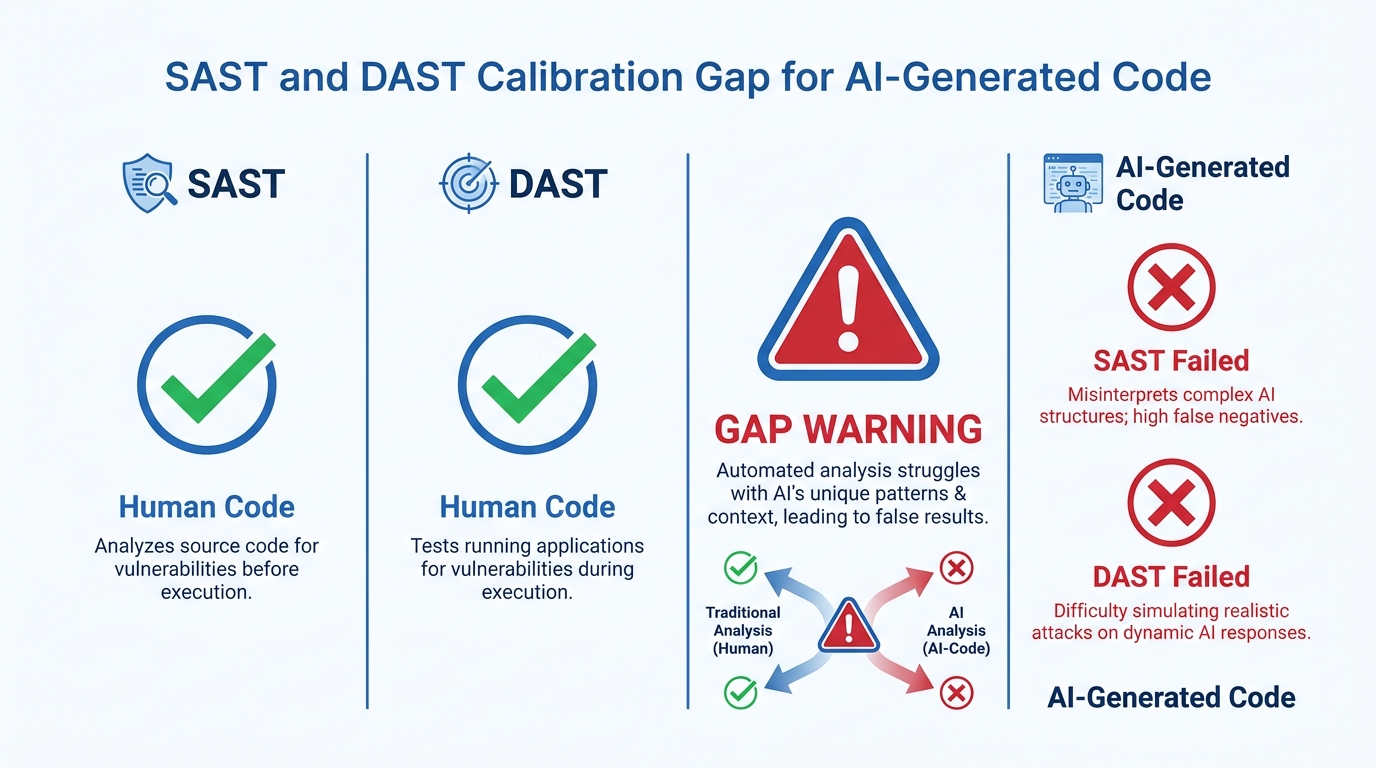
DAST does not close the gap either. Dynamic analysis finds vulnerabilities through runtime behavior, but it depends on test coverage calibrated for expected application paths. AI-generated code sometimes creates execution branches a developer did not deliberately design and a test suite does not exercise. The hidden security risk in AI-assisted development is often the governance assumption that existing controls still apply, when the underlying code generation model has changed what the controls are actually testing.
For enterprises running established DevSecOps pipelines, this is an uncomfortable position. The pipeline works. The controls are documented. The evidence is there for auditors. But the pipeline was built around a model of software development where a human wrote the code and the tool checked it against known-bad patterns. Adding a governance layer to GitHub Copilot at the policy level does not recalibrate the testing tools; it adds process around a gap the process cannot close.
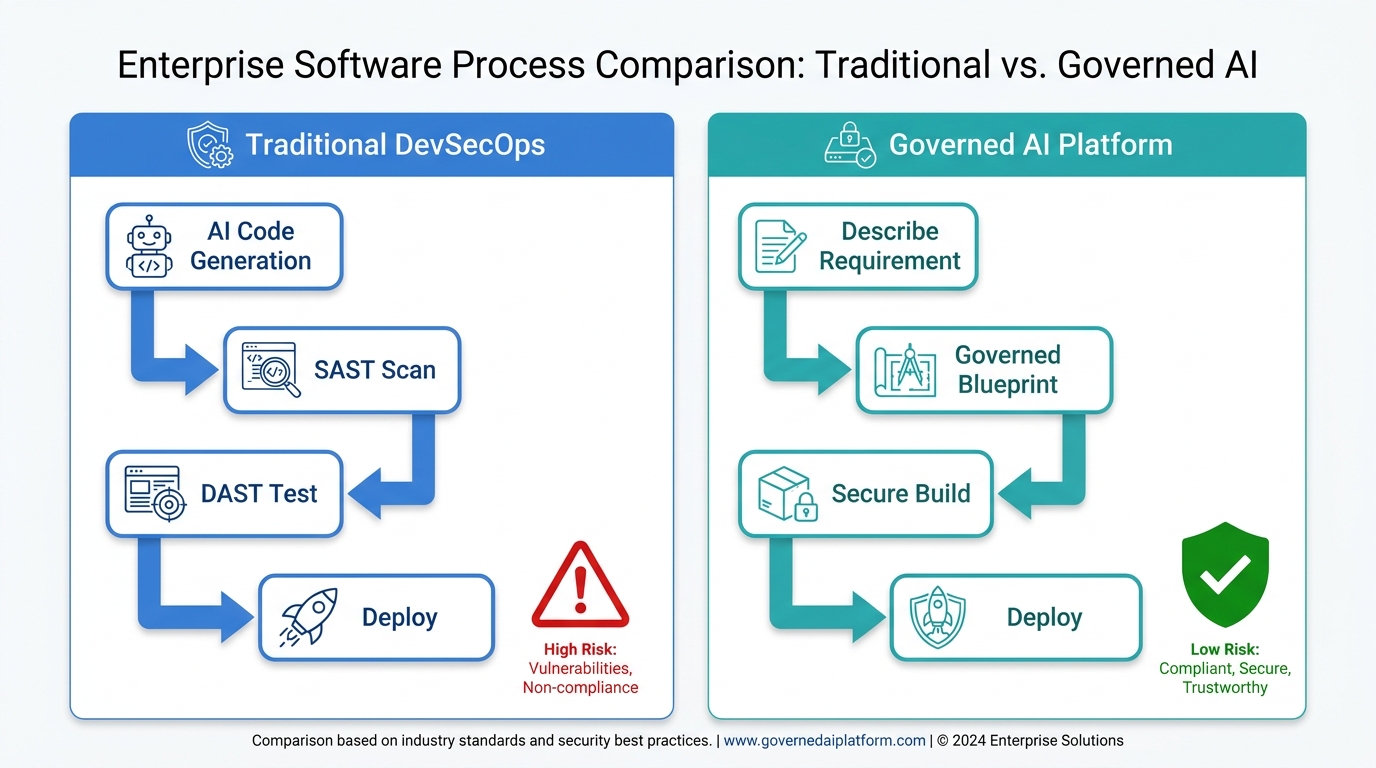
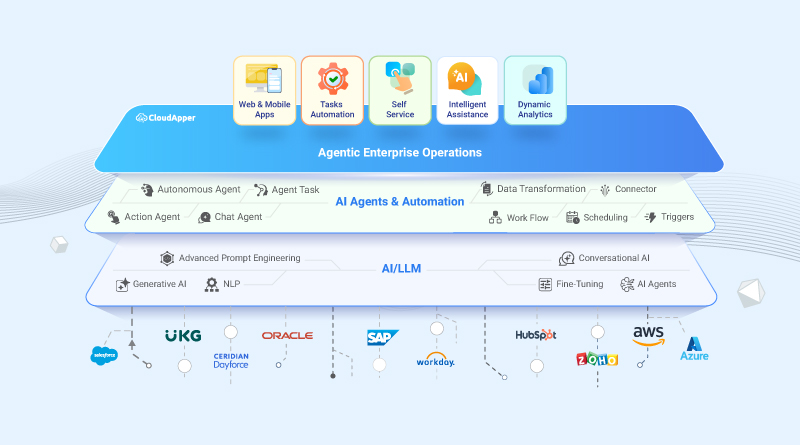
CloudApper AI addresses this at the architecture level rather than the toolchain level. When an enterprise professional describes what an application needs to do and CloudApper AI generates it within a governed blueprint, the security controls are applied at generation time, not after the fact by a tool that was not calibrated for what it is scanning. A director of IT at a manufacturing company recently described the difference: she needed a quality exception tracking application that connected to her ERP. She described the requirement to CloudApper AI. The application was built within the platform’s governed environment. The question of whether SAST caught something subtle in an AI-generated API call was never part of the conversation, because the code was never uncontrolled to begin with.
The compliance implication is direct. SOC 2 auditors are increasingly asking about AI-assisted development workflows and the evidence that proves controls operated, not just that tests ran. A SAST scan result is evidence that the test executed, not that the control was adequate for the code being tested. That distinction is becoming harder to ignore when the auditor knows your team uses Copilot. A security review of your AI development platform should include a direct answer to whether your testing tools are calibrated for AI-generated code patterns. If the answer is unclear, the gap is real and the audit finding is likely.
Teams evaluating their security testing stack in light of AI coding tool adoption have two paths: attempt to recalibrate existing tools for AI-generated patterns, a moving target as models and suggestions evolve, or shift the problem upstream by using a governed build environment where the AI operates within defined constraints. An enterprise AI coding governance framework that governs the generation environment is a fundamentally different answer than one that attempts to inspect the output afterward.
If your team is using AI coding tools and you need a governed platform that eliminates the security testing calibration problem at the source, CloudApper AI was built for that requirement. Contact the team to see how it works in your environment.

What is CloudApper AI Platform?
CloudApper AI is an advanced platform that enables organizations to integrate AI into their existing enterprise systems effortlessly, without the need for technical expertise, costly development, or upgrading the underlying infrastructure. By transforming legacy systems into AI-capable solutions, CloudApper allows companies to harness the power of Generative AI quickly and efficiently. This approach has been successfully implemented with leading systems like UKG, Workday, Oracle, Paradox, Amazon AWS Bedrock and can be applied across various industries, helping businesses enhance productivity, automate processes, and gain deeper insights without the usual complexities. With CloudApper AI, you can start experiencing the transformative benefits of AI today. Learn More
- Useful Links:
- Agentic AI
- No-Code/Low-Code
- Custom Software
- HCM Personalization
- iPaaS
- FedRAMP
CloudApper AI Solutions


- Works with







- and more.
Similar Posts

CMMC Level 2 and Internally Built Applications: The Evidence Gap…

Vendor-Built Internal Applications: The Governance Gap Enterprise IT Inherited From…