When SOX auditors add an internally built application to scope, the evidence gap cannot be closed retroactively. Here is what IT needs to understand about ITGC requirements, audit period evidence, and how governed application development changes the conversation before the next walkthrough.

TL;DR
When an internally built application is flagged during a SOX 404 audit, the primary problem is not missing controls but missing evidence records from the audit period that cannot be retroactively created. PCAOB AS 2201 and AS 2110 require that IT general controls — including logical access, change management, program development, and computer operations — be supported by documented evidence, not just described processes. Internal applications built without an evidence layer from the start create retroactive audit exposure that compensating controls cannot fully resolve within the same audit cycle. The forward path is building internal applications on a governed platform where ITGC-compatible evidence infrastructure is part of the architecture, not an afterthought.
Table of Contents
Item 14 on the prepared-by-client list reads: “Complete access provisioning and de-provisioning log for [Application Name], covering the 12-month audit period.” The application in question is the custom expense approval workflow the finance team built three years ago. It processes data before journal entries post to the ERP. It has never appeared in a SOX scoping conversation. Until now.

The IT team opens the admin panel. There is no access log. There never was.
That is the moment SOX ITGC compliance shifts from a governance concern to an audit-cycle problem with a deadline attached. And it is not primarily a technical problem. Organizations that build internal applications on CloudApper’s governed platform inherit structured evidence infrastructure — access provisioning records, change management logs, operational monitoring — by design, not as an afterthought when item 14 arrives.
How Internally Built Applications Enter SOX Scope
Under PCAOB AS 2201, the scoping process works top-down. Auditors identify significant accounts and disclosures, trace the relevant assertions back to the processes and controls that support them, and identify IT systems whose outputs feed those controls. An internally built application that transforms, routes, or approves financial data before it reaches the ERP is in scope for ITGC testing whether IT has formally documented it or not.
PCAOB AS 2110 requires auditors to understand how IT affects the financial statements, including the general controls important to any automated control they plan to rely on. A custom approval workflow with no change management records, no access governance, and no operational monitoring is not invisible to this standard. It is a control gap attached to a financial assertion.
Applications enter scope two ways: auditors discover the data lineage during walkthrough, or management discloses the application during risk assessment and auditors determine it is financially relevant. Either path arrives at the same place. The application inventory gap that blocks AI transformation programs is the same gap that creates unplanned SOX scope expansions — internal applications that carry operational weight without appearing in any governance record.
The Evidence Problem That Cannot Be Retroactively Solved
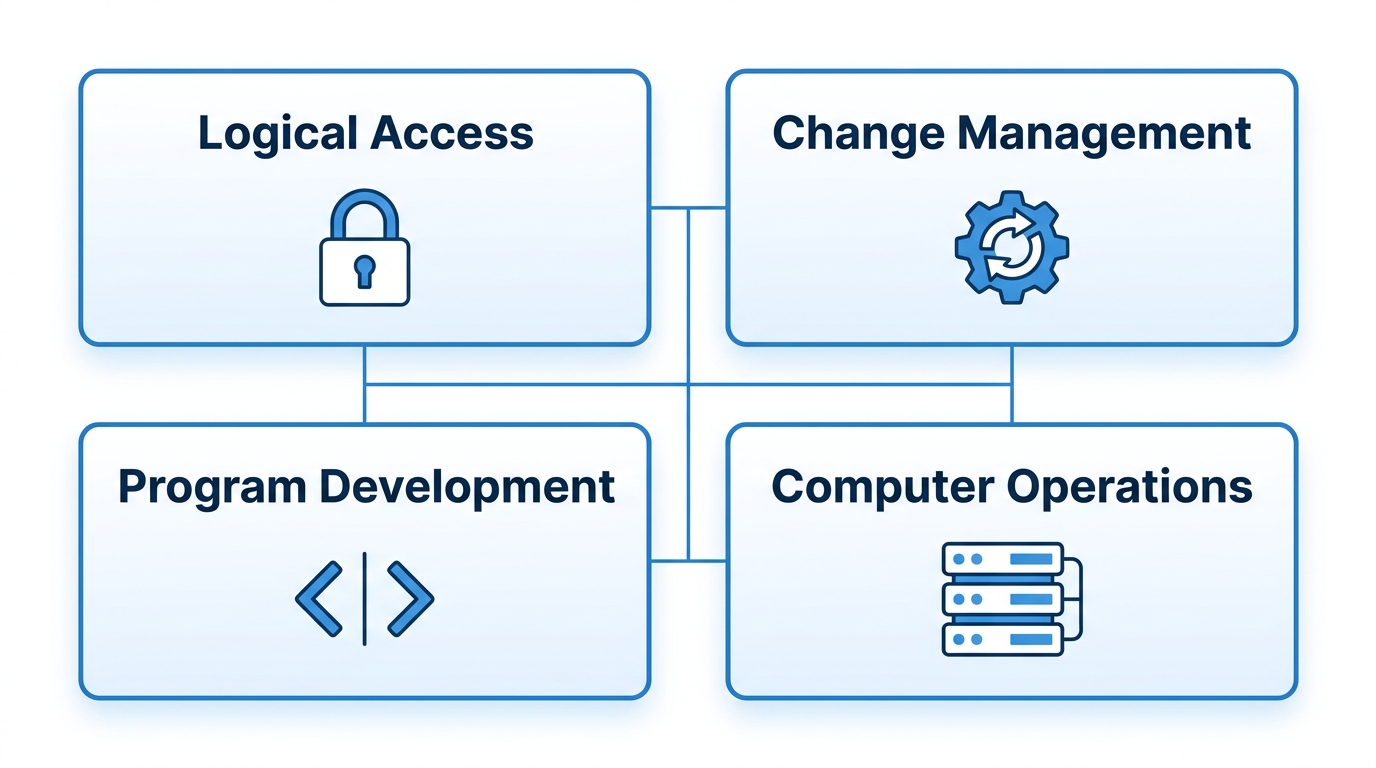
The four ITGC domains — logical access, change management, program development, and computer operations — each require evidence, not just controls. An access review you can describe but cannot demonstrate with a log did not happen for audit purposes. A change process you followed but cannot show via a ticket record, approval chain, and pre/post-implementation test result does not meet the evidentiary standard under AS 2201.
This is the specific problem that makes a flagged internal application different from a flagged enterprise system. Unlike controls — which you can implement prospectively — you cannot create records for events that occurred during the audit period. The 12 months are behind you.
Compensating controls matter at the margins. They do not substitute for primary control evidence. An auditor who cannot obtain sufficient evidence for a primary control may issue a significant deficiency or material weakness finding regardless of how well the application currently operates. The board is asking whether the CIO can produce evidence, not policy — and the distinction matters most in the audit cycle where the evidence period has already closed.
What Changes Between This Audit and the Next
Within the current cycle, realistic options are narrow. You can work with external auditors to identify alternative evidence — ERP-level access controls, downstream reconciliation reviews, segregation-of-duties records — that provide partial reliance. You can document change history using available artifacts: version control, deployment logs, approval email chains. You can implement controls prospectively and demonstrate they are operating by year-end.
None of this fully resolves a 12-month primary control evidence population. What it creates is a finding that carries into the next audit cycle with a documented remediation commitment. The more productive question is what the application looks like when the next audit period opens.
Platform engineering that optimizes for developer velocity without building in governance produces exactly this failure mode — the controls exist somewhere, in someone’s memory or a shared drive, but the evidence layer was never designed into how the application was built.
The Application That Should Not Surprise the Auditor Again
Internal applications fail ITGC testing at the evidence level, not the control level. The controls are often present in some form. The records that prove them — provisioning requests, access certification sign-offs, change tickets with approvals, deployment test results — were never captured because no one building the application thought about what an auditor would ask for 36 months later.
A director of IT who describes the operational requirement — an expense approval workflow, a journal entry support tool, a reconciliation data feed — and has CloudApper AI build the application gets the evidence infrastructure that SOX auditors require alongside the application itself, not as a separate compliance project that follows three years later. Change management records, access provisioning logs, and operational monitoring are part of the platform architecture. The application that gets built is already producing what item 14 will ask for.
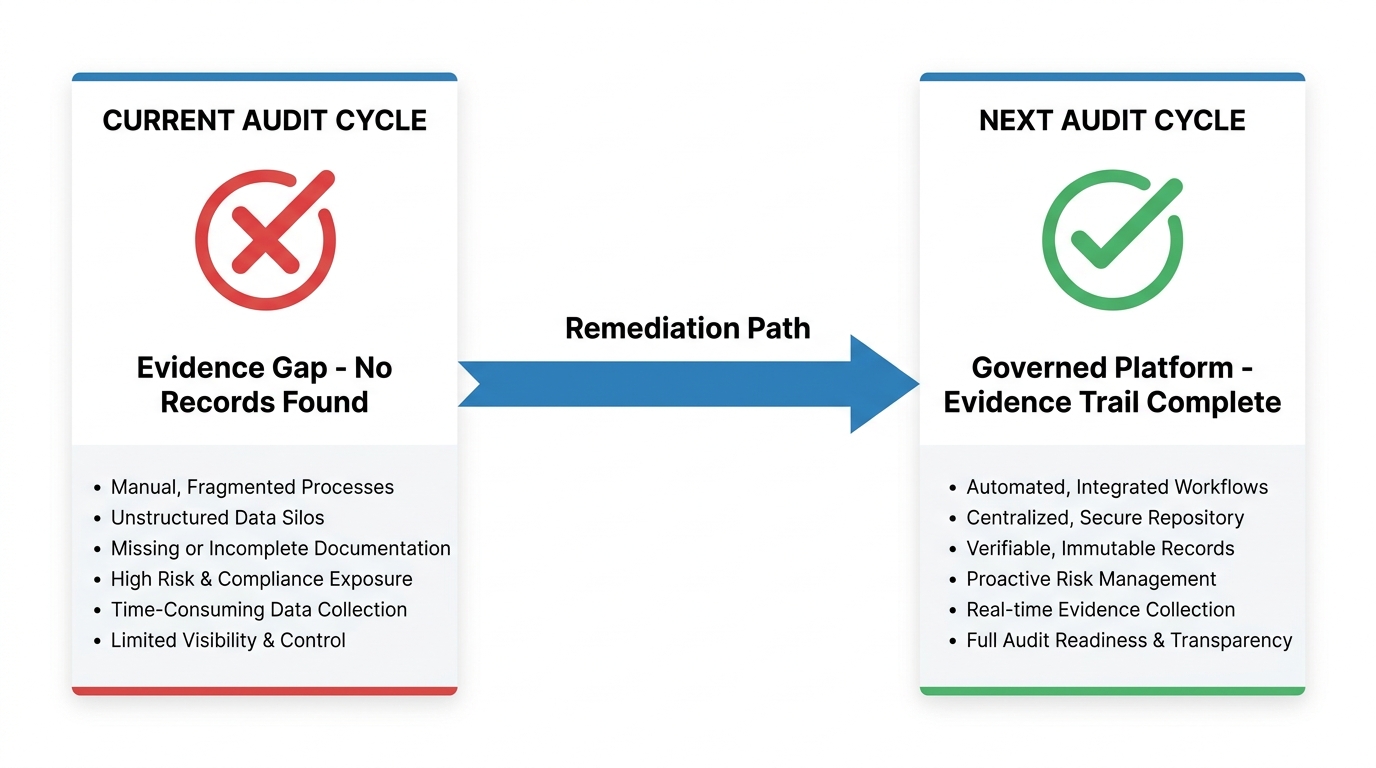
That is a different conversation with the auditor. Not “we did not have that” — but “here it is, covering the full period.”
IT Audit Managers and Directors of IT at public companies managing SOX ITGC exposure from internally built applications can explore how CloudApper’s governed platform creates the evidence layer that ITGC testing requires — before the next prepared-by-client list arrives. Connect with the CloudApper team to see how governed application development changes the audit conversation.

What is CloudApper AI Platform?
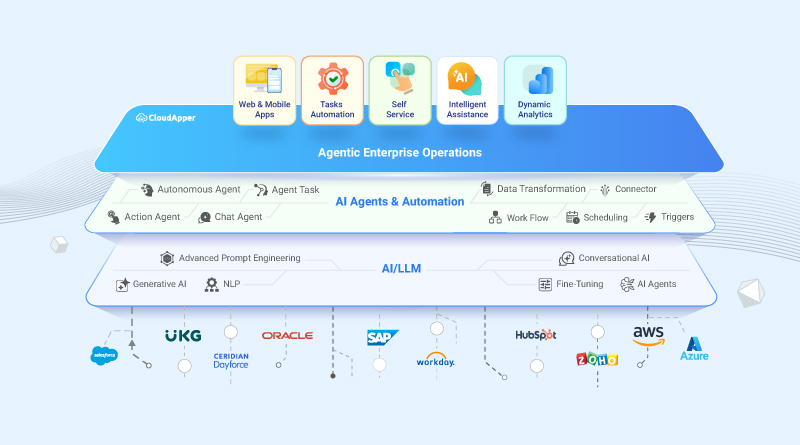
CloudApper AI is an advanced platform that enables organizations to integrate AI into their existing enterprise systems effortlessly, without the need for technical expertise, costly development, or upgrading the underlying infrastructure. By transforming legacy systems into AI-capable solutions, CloudApper allows companies to harness the power of Generative AI quickly and efficiently. This approach has been successfully implemented with leading systems like UKG, Workday, Oracle, Paradox, Amazon AWS Bedrock and can be applied across various industries, helping businesses enhance productivity, automate processes, and gain deeper insights without the usual complexities. With CloudApper AI, you can start experiencing the transformative benefits of AI today. Learn More
- Useful Links:
- Agentic AI
- No-Code/Low-Code
- Custom Software
- HCM Personalization
- iPaaS
- FedRAMP
CloudApper AI Solutions


- Works with








- and more.
Similar Posts

Power Apps Orphaned App: The IT Ownership Problem That Starts…

Legacy Modernization Keeps Getting Defunded. The Problem Isn’t Your Budget…