Hiring Medical Assistants faster starts with asking the right questions. Discover 10 essential Medical Assistant interview questions that assess clinical skills, EHR proficiency, and patient communication—plus learn how CloudApper AI Recruiter automates screening via SMS, engages candidates 24/7, and reduces time-to-hire by 70% for healthcare organizations.
Table of Contents
Hiring Medical Assistants has become one of the most pressing challenges facing healthcare organizations today. According to the Bureau of Labor Statistics, demand for Medical Assistants is projected to grow 16% through 2031—much faster than average—yet facilities are struggling to fill positions. The average time-to-hire for Medical Assistants now exceeds 36 days, while cost-per-hire has climbed to $3,800, straining already tight healthcare budgets.
But here’s the critical bottleneck: candidate engagement and drop-off. Recent industry data shows that nearly 55% of Medical Assistant applicants abandon the hiring process before completing initial screening, primarily due to slow response times, cumbersome application processes, and lack of communication. When you’re competing for qualified MAs who can handle both clinical and administrative duties, speed isn’t just nice to have—it’s essential.

The landscape has shifted dramatically too. Today’s Medical Assistants need proficiency with EHR systems, telehealth platforms, medical billing software, and evolving compliance requirements—far beyond the traditional scope of the role. Your interview questions must assess these modern competencies while screening for the empathy, multitasking ability, and attention to detail that define exceptional MAs.
Enter CloudApper AI Recruiter: our conversational AI chatbot that revolutionizes Medical Assistant hiring. It engages candidates instantly via SMS or web chat, conducts intelligent screening interviews 24/7, automates credential verification, and eliminates up to 90% of manual screening work—all while removing unconscious bias and maintaining HIPAA-aware compliance standards.
In this guide, we’ll give you the exact interview questions you need to identify top-tier Medical Assistants, complete with sample strong answers. Then we’ll show you how CloudApper AI Recruiter handles the heavy lifting, transforming your hiring process from weeks to days.
Why These Questions Matter for Medical Assistants
The Medical Assistant role has evolved from basic clinical support to a hybrid position requiring clinical competency, technology fluency, patient communication excellence, and administrative precision. Today’s MAs are often the bridge between patients and providers—managing schedules, documenting in EHRs, conducting intake assessments, performing lab work, handling insurance verification, and serving as the face of the practice.
Old-school questions like “What are your strengths and weaknesses?” simply don’t cut it anymore. You need to assess clinical judgment in ambiguous situations, EHR proficiency, patient communication under stress, multitasking during peak hours, and adaptability to new technologies and protocols. The best Medical Assistants combine technical skills with emotional intelligence and organizational agility.
With turnover rates for Medical Assistants averaging 30-40% annually in many practices, asking the right questions upfront isn’t just about filling positions—it’s about building a stable, high-performing team that enhances patient care and practice efficiency. These questions will help you identify candidates who’ll thrive in fast-paced, patient-centered environments.
Top 10 Essential Medical Assistant Interview Questions (With Sample Strong Answers)
1. Describe your experience with Electronic Health Records (EHR) systems. Which platforms have you used, and how do you ensure accurate documentation?
Why ask this?
EHR proficiency is non-negotiable for modern MAs. This question reveals technical competency, attention to detail, and understanding of documentation’s role in patient safety and compliance.
Sample Strong Answer:
“I’ve worked extensively with Epic and Athenahealth in my previous roles. I document patient vitals, chief complaints, medication lists, and procedure notes in real-time whenever possible to ensure accuracy. I’m careful to use approved medical terminology and always double-check critical information like allergies and current medications. I also understand that documentation is a legal record, so I never chart something I didn’t personally observe or perform. When I’m unsure about how to document something, I ask the provider or check our practice protocols.”
2. Walk me through how you would room a patient, from greeting them in the waiting area to completing intake.
Why ask this?
This reveals workflow understanding, patient communication skills, clinical competency, and efficiency—the core of MA responsibilities.
Sample Strong Answer:
“I’d greet the patient warmly by name, verify their identity with two identifiers, and escort them to the exam room. I’d ask about their chief complaint and review any updates to their medical history, medications, or allergies. Then I’d take and document vital signs—blood pressure, pulse, temperature, respirations, and weight. I’d also ask about pain level if relevant and document everything in the EHR. Before leaving, I’d let them know the provider will be in shortly and ask if they need anything while they wait. The entire process takes about 5-7 minutes, and it sets the tone for their entire visit.”
3. Tell me about a time when you had to handle an anxious, frustrated, or upset patient. How did you approach the situation?
Why ask this?
Patient communication and de-escalation skills are essential. This question assesses emotional intelligence and problem-solving under pressure.
Sample Strong Answer:
“I had a patient who was very frustrated because she’d been waiting longer than expected due to an emergency case. She was visibly upset and worried she’d miss picking up her daughter. I acknowledged her frustration, apologized for the delay, and explained the situation without violating privacy. I checked with the provider and gave her a realistic timeframe, then offered to have our front desk help coordinate her schedule. I also brought her water and checked in once more. By the time she saw the doctor, she’d calmed down and actually thanked me for caring about her situation. I learned that acknowledgment and communication go a long way.”
4. What steps do you take to maintain infection control and ensure patient safety in clinical settings?
Why ask this?
Infection prevention is fundamental to patient safety. This tests knowledge of standard precautions and accountability to protocols.
Sample Strong Answer:
“I follow hand hygiene strictly—washing or sanitizing before and after every patient contact and after removing gloves. I use appropriate PPE based on the situation and follow transmission-based precautions when indicated. I properly dispose of sharps, disinfect exam rooms between patients, and ensure equipment like blood pressure cuffs and thermometers are cleaned according to protocol. I also stay current on vaccinations and annual training. Infection control isn’t something you cut corners on—it protects patients, staff, and the entire community.”
5. How do you prioritize tasks when you’re supporting multiple providers during a busy clinic day?
Why ask this?
Medical Assistants must juggle clinical tasks, administrative duties, and competing demands. This reveals time management and critical thinking.
Sample Strong Answer:
“I start by understanding each provider’s schedule and preferences, then I prioritize based on urgency and patient flow. Rooming patients efficiently keeps everyone on schedule, so that’s always a priority. I batch similar tasks when possible—like restocking rooms during slower moments. If two providers need me simultaneously, I quickly assess which task is time-sensitive. For instance, if one needs me to room a patient and another needs prior authorization paperwork, the patient comes first. I also communicate openly with my team—if I’m getting overwhelmed, I speak up so we can redistribute tasks. Good teamwork makes busy days manageable.”
6. Describe your experience with medical billing, coding, or insurance verification. How do you handle denied claims or coverage issues?
Why ask this?
Many MAs handle administrative duties that directly impact practice revenue. This assesses understanding of the business side of healthcare.
Sample Strong Answer:
“In my last role, I handled insurance verification before appointments to prevent surprises. I checked eligibility, benefits, and whether services required prior authorization. When we had denied claims, I’d review the denial reason, correct coding errors if needed, and resubmit with proper documentation. I also learned to communicate with patients upfront about potential out-of-pocket costs, which reduced billing disputes later. Understanding the billing side helps the practice run smoothly and keeps patients informed.”
7. Have you ever caught a potential medication error or safety issue? What did you do?
Why ask this?
MAs serve as an extra set of eyes for patient safety. This question tests clinical judgment, attention to detail, and communication with providers.
Sample Strong Answer:
“Yes. I was preparing a patient’s chart when I noticed the provider had ordered a medication the patient was allergic to—it was listed in our EHR, but the provider had likely missed it while multitasking. I immediately brought it to the provider’s attention before the prescription was sent. The provider thanked me and ordered an alternative medication. It reinforced that everyone on the team has a responsibility to catch errors before they reach the patient. I never hesitate to speak up about safety concerns.”
8. How comfortable are you with performing clinical procedures like venipuncture, EKGs, injections, or specimen collection?
Why ask this?
Clinical skills are fundamental to the MA role. This assesses hands-on competency and confidence with procedures.
Sample Strong Answer:
“I’m very comfortable with these procedures. I’ve performed hundreds of venipunctures and have a high success rate, even with difficult sticks. I’m certified in phlebotomy and keep my skills sharp. I’ve also conducted EKGs, administered vaccines and injections, collected throat cultures and urine specimens, and performed point-of-care testing like glucose and strep tests. I always explain procedures to patients beforehand to reduce anxiety, and I follow proper technique to ensure accuracy and safety. If I ever encounter a situation beyond my skill level, I ask for assistance.”
9. Tell me about a time you had to adapt quickly to a change in protocol, technology, or workflow.
Why ask this?
Healthcare is constantly evolving. This reveals adaptability, learning agility, and attitude toward change.
Sample Strong Answer:
“When COVID-19 hit, our entire practice had to implement telehealth within two weeks. I had never used telehealth platforms before, but I quickly learned our system, helped patients troubleshoot technology issues, and adapted our rooming procedures for hybrid visits. I also helped create new screening protocols and PPE procedures. It was stressful initially, but I focused on learning quickly and staying flexible. That experience taught me I can adapt to almost anything when I approach it with a positive attitude and willingness to learn.”
10. Why did you choose to become a Medical Assistant, and what do you find most rewarding about this role?
Why ask this?
This uncovers intrinsic motivation, cultural fit, and long-term potential—helping you identify candidates who’ll stay and grow with your organization.
Sample Strong Answer:
“I chose to become a Medical Assistant because I wanted a career in healthcare that let me interact directly with patients while also using my organizational and technical skills. I love the variety—one moment I’m comforting a nervous patient, the next I’m coordinating with insurance, then I’m assisting with a procedure. What’s most rewarding is knowing I make a difference in someone’s healthcare experience. When a patient thanks me for making them feel cared for, or when I catch something that improves their care, that’s what keeps me motivated.”
How CloudApper AI Recruiter Makes Hiring Medical Assistants Effortless
Now imagine transforming your Medical Assistant hiring from a weeks-long grind into a streamlined, automated process that identifies top candidates in days. That’s exactly what CloudApper AI Recruiter delivers.
Here’s the reality: traditional MA hiring means drowning in applications, playing phone tag to schedule screenings, manually verifying certifications, and losing qualified candidates to faster-moving competitors. CloudApper eliminates all of that.
How It Works:
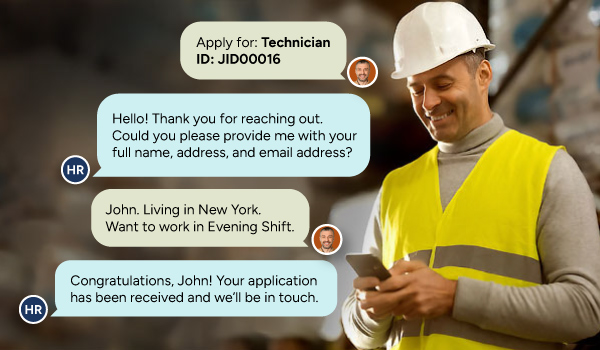
The moment a candidate applies—whether through your careers page, Indeed, a QR code at a career fair, or even a text-to-apply number—CloudApper’s conversational AI chatbot engages them instantly via SMS or web chat. No waiting for business hours. No missed opportunities.
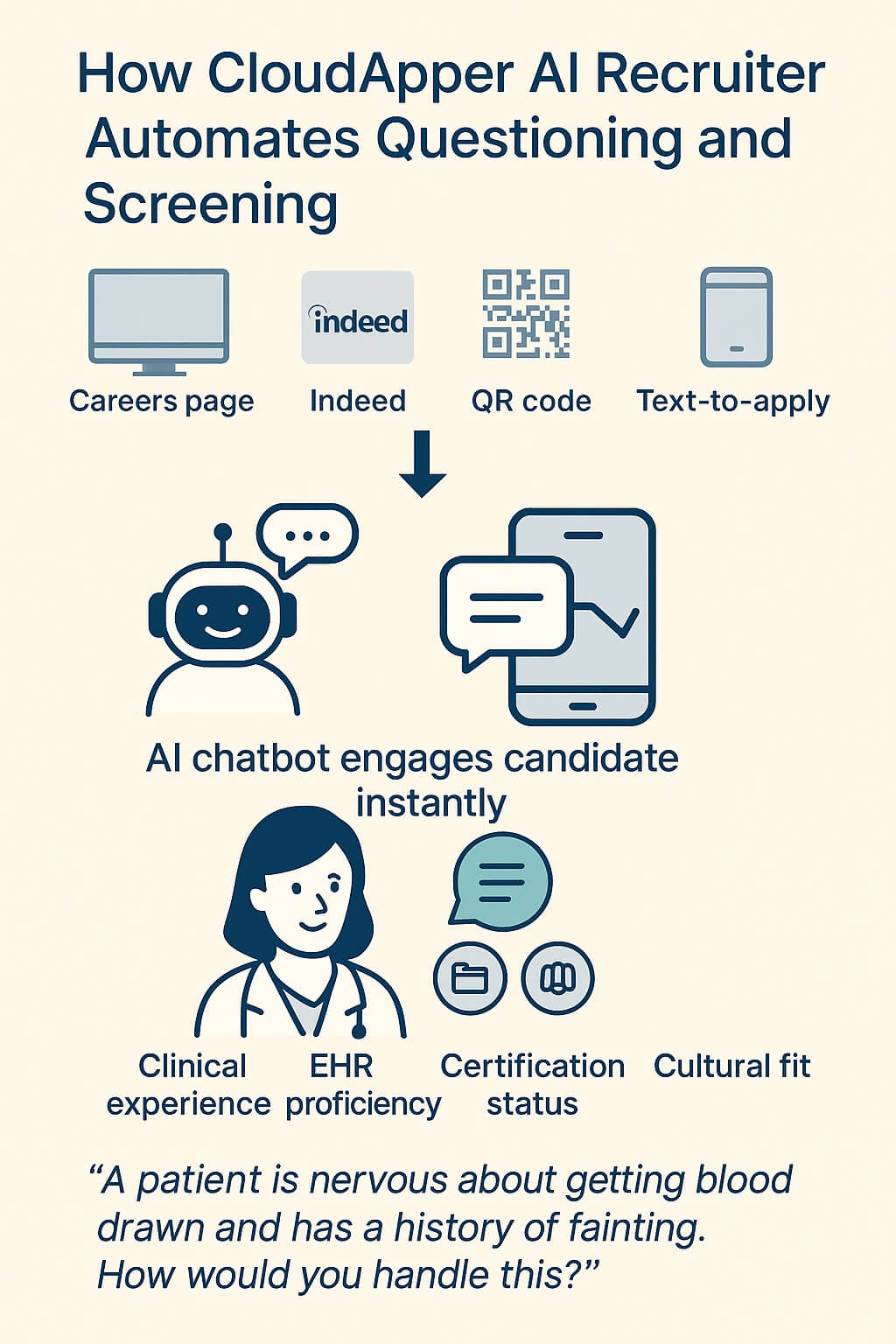
The AI conducts an intelligent, natural-language screening interview, asking customized questions like the ones above—assessing clinical experience, EHR proficiency, certification status, scheduling availability, and cultural fit. It can even simulate clinical scenarios: “A patient is nervous about getting blood drawn and has a history of fainting. How would you handle this?”
Key Features That Transform Medical Assistant Hiring:
- 24/7 Candidate Engagement: Whether someone applies at 11 PM after their shift or on a Saturday morning, CloudApper responds within seconds, keeping top candidates engaged and preventing drop-off.
- Automated Certification & Credential Verification: The AI automatically confirms Medical Assistant certifications (CMA, RMA, CCMA), BLS/CPR status, vaccination records, and background check consent—eliminating tedious manual follow-up.
- Clinical Scenario Assessment: CloudApper can present real-world patient situations and evaluate candidates’ responses for clinical judgment, empathy, problem-solving, and communication skills.
- EHR & Technology Screening: The AI asks about specific EHR platforms (Epic, Cerner, Athenahealth), medical billing software, and telehealth experience, ensuring candidates have the technical skills your practice needs.
- Bias-Free, Compliant Screening: Every candidate receives identical questions in the same conversational tone, eliminating unconscious bias and ensuring EEOC compliance while focusing purely on qualifications.
- Seamless Interview Scheduling: Once candidates pass initial screening, the AI offers available interview slots directly from your hiring manager’s calendar—no more email chains or scheduling conflicts.
- Full ATS Integration: CloudApper syncs automatically with your existing Applicant Tracking System (Workday, Greenhouse, iCIMS, or others), so all candidate data flows seamlessly into your workflow without duplicate data entry.
Real-World Results:
A multi-location urgent care network in Texas implemented CloudApper AI Recruiter and reduced their Medical Assistant time-to-hire from 40 days to just 12 days. By engaging candidates instantly and automating initial screening, they cut recruiter workload by 65% and improved candidate experience scores by 45%. Their HR director shared: “We were losing great MAs because we couldn’t respond fast enough. CloudApper changed that overnight. Now we’re screening candidates while our competitors are still reading resumes.”
Another large family medicine practice used CloudApper to screen 450 Medical Assistant applicants in one month during an expansion—something that would have required two full-time recruiters working overtime. The AI handled it flawlessly, identifying candidates with the right mix of clinical skills, EHR experience, and patient communication abilities.
The best part? CloudApper learns and improves. If certain questions or response patterns correlate with successful hires, the AI adapts its screening to prioritize those indicators, making your hiring process smarter over time.
Ready to see it in action? Explore CloudApper AI Recruiter here and discover how healthcare organizations nationwide are filling Medical Assistant positions faster, more efficiently, and with better quality-of-hire than ever before.
Stop Losing Top Medical Assistants to Slow Hiring
The reality is simple: in today’s competitive healthcare talent market, speed wins. The best Medical Assistants—those with clinical skills, EHR proficiency, and genuine patient empathy—are hired within days, not weeks. If your hiring process involves delayed responses, multiple rounds of manual screening, and scheduling gymnastics, you’re losing top talent to organizations that move faster.
CloudApper AI Recruiter levels the playing field. It gives your practice or health system enterprise-grade recruiting automation at a fraction of the cost, so you can compete for talent like the major hospital networks—even if you’re a smaller clinic or specialty practice.
Your patients deserve skilled, compassionate Medical Assistants. Your team deserves to work with qualified, reliable colleagues. And your recruiters deserve to focus on relationship-building and final interviews, not administrative screening tasks.
Book a demo today and see how our AI can start screening Medical Assistant candidates within 48 hours. Let us show you how healthcare organizations are transforming their hiring—one automated conversation at a time.
What’s your biggest challenge when hiring Medical Assistants? Drop a comment below—our team would love to hear from you and share strategies that are working for healthcare practices across the country.
You might also like to read:
10 Essential Home Health Aide & Phlebotomist Interview Questions (+ AI Recruiter Automation Guide)
10 Essential CNA & Patient Care Tech Interview Questions to Ask (And How AI Makes Hiring 10× Faster)
10 Essential Registered Nurse (RN) Interview Questions to Ask (And How AI Makes Hiring Stress-Free and 10× Faster)

What is CloudApper AI Platform?
CloudApper AI is an advanced platform that enables organizations to integrate AI into their existing enterprise systems effortlessly, without the need for technical expertise, costly development, or upgrading the underlying infrastructure. By transforming legacy systems into AI-capable solutions, CloudApper allows companies to harness the power of Generative AI quickly and efficiently. This approach has been successfully implemented with leading systems like UKG, Workday, Oracle, Paradox, Amazon AWS Bedrock and can be applied across various industries, helping businesses enhance productivity, automate processes, and gain deeper insights without the usual complexities. With CloudApper AI, you can start experiencing the transformative benefits of AI today. Learn More
- Useful Links:
- Agentic AI
- No-Code/Low-Code
- Custom Software
- HCM Personalization
- iPaaS
- FedRAMP
CloudApper AI Solutions for HR

- Works with








- and more.
Similar Posts

Verify Required Certifications and Licenses Without Slowing Down Screening

How to Standardize Candidate Selection Across Regional Hiring Teams