Choosing between legacy application modernization vendors comes down to seven questions: rebuild, rehost or wrap, what happens to your logic and data, where it runs, who maintains it, which compliance reports exist, how fast the first release ships and how you leave.



TL;DR
- Ask every vendor whether it will rebuild, rehost or wrap your application, and why that choice fits yours.
- Make the vendor show how business logic and data carry over, with reconciliation checks instead of promises.
- Confirm where the application runs, who maintains it after launch and what the support cost is in year two.
- Ask for audit reports and their scope, not just compliance badges.
- Get a first-release date and a clear exit path in writing before you sign.
Table of Contents
Most legacy applications get modernized for practical reasons: the one person who understood the code is leaving, the operating system is losing support, or the business needs a mobile screen the old system cannot give. Then the search for legacy application modernization services starts, and every vendor describes the work in the same words. The partner you pick decides whether the application is rebuilt, rehosted or wrapped, and who looks after it once it is live.

Your legacy application may sit beside Workday, UKG or Oracle, which are built to be the system of record for people, pay and finance, or it may run a process none of them was designed to cover. Either way, the seven questions below separate the vendors that finish the job from those that leave you with a second system to maintain. A platform approach like CloudApper AI answers them without forcing a full rebuild.
Legacy application modernization services: seven questions to ask every vendor
Ensono found that 61% of organizations paused, delayed, scaled back or abandoned an IT modernization initiative in the past 24 months. Put these questions to application modernization vendors before the contract, not after the first missed milestone.
1. Will you rebuild, rehost or wrap the application?
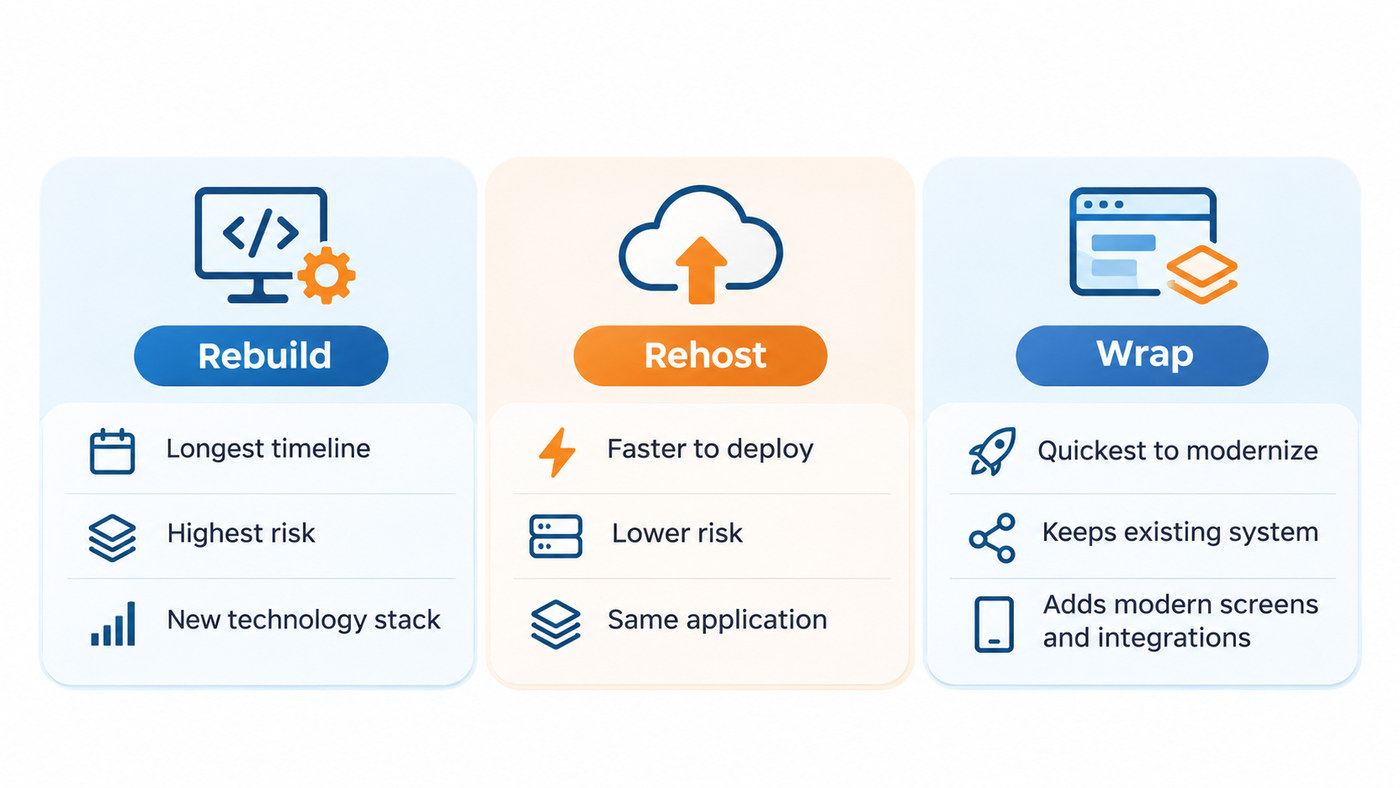
Each approach solves a different problem. A rebuild rewrites the application on a new stack and carries the most risk and the longest timeline. Rehosting moves the same code to new infrastructure, which fixes the data center but not the application. Wrapping keeps the legacy system running and adds a modern layer for screens, approvals and integrations. Ask which one the vendor recommends for your application and why. A partner who proposes the same answer for every client is selling a method, not solving your problem.
2. Do our business logic and data carry over?
Legacy applications hold years of rules nobody wrote down, often inside stored procedures and reports. Ask how the vendor discovers that logic, how it proves the new version produces the same results, and whether data is moved, synchronized or left in place. A good answer includes a migration plan with reconciliation checks, not a promise that it will work.
3. Where will it run: AWS, Azure, Google Cloud or on-premises?
Your security team probably has a standing answer. Ask whether the vendor deploys into infrastructure you control or only into its own hosting, and what that means for data residency. A vendor that supports one environment may still be the right fit, but you should know that before design starts.
4. Who maintains it after launch?
Go-live is where many modernization projects change hands. Ask who patches the platform, who handles upgrades, who fixes defects and how fast. Customer-owned code needs a customer team to keep it healthy. Get the support model in writing, along with what it costs in year two.
5. Which compliance credentials can you show, and what do they cover?
A badge on a website is a starting point. A vendor hosted on audited infrastructure is not the same as a vendor whose applications inherit those controls. Ask for the audit report, its scope and its date, then match it to your own requirements, such as HIPAA, FedRAMP or SOC 2. Your security team will ask for this anyway, so an early review saves weeks.
6. How long until the first release, and what is in it?
Time to first release matters more than the total plan, because it shows whether the approach works. Ask for a date, a defined scope and a list of what stays on the old system until later. Running both systems side by side is normal, so ask how the parallel period is governed, so records and approvals do not split between them.
7. What does leaving look like?
Ask this before you sign. Can you export your data, run the application without the vendor and move it elsewhere if the relationship ends? The cost of exit is easy to ignore at the start and expensive at the end. Anything locked in a proprietary format or tied to the vendor’s staff deserves a hard look.
How to choose a modernization partner you can keep
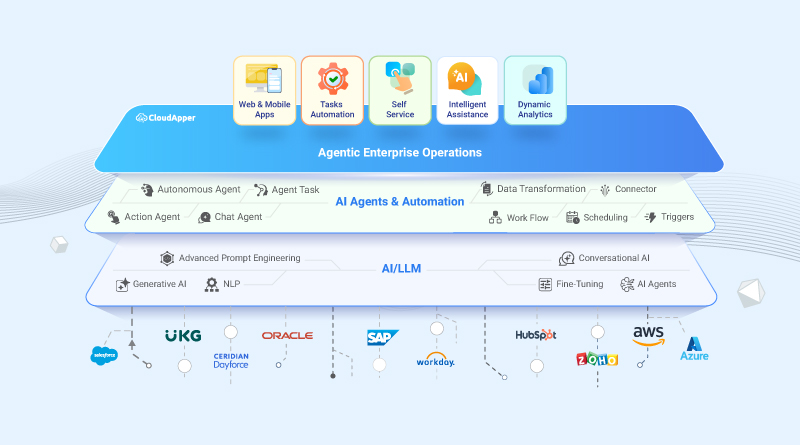
Seven questions decide whether a partner fits your application. Ask whether the vendor will rebuild, rehost or wrap, and why. Confirm that business logic and data carry over with proof. Check where the application runs, who maintains it after launch, which compliance credentials you can verify, when the first release arrives and how you leave if you need to. CloudApper AI answers these by modernizing the application you have instead of replacing it. One hardened platform sits on top of the legacy system, updates and maintenance are handled for you, and first releases are measured in weeks instead of quarters. Your legacy application keeps its role, and your team stops carrying the upkeep.
If you want to test your shortlist against these questions, you can book a demo.
Frequently asked questions
What are legacy application modernization services?
Legacy application modernization services update an older business application so it runs on current infrastructure, works with modern systems and can be supported going forward. Depending on the vendor, that means rebuilding the application, rehosting it on new infrastructure, or wrapping it with a modern layer.
What is the difference between rebuilding, rehosting and wrapping a legacy application?
Rebuilding rewrites the application on a new technology stack. Rehosting moves the existing application to new infrastructure without changing how it works. Wrapping leaves the legacy system in place and adds a modern layer for screens, workflows and integrations on top of it.
How do I compare application modernization vendors?
Ask every vendor the same questions: which approach they recommend, how business logic and data carry over, where the application runs, who maintains it after launch, which compliance reports they can share, how soon the first release ships and how you can leave. Compare the answers in writing.
How long does legacy application modernization take?
It depends on scope and approach. A full rebuild usually takes much longer than wrapping an existing system with a modern layer. Ask each vendor for a first-release date and a defined scope, since a short path to a first release shows whether the approach works.
Who should maintain a modernized application after launch?
Responsibility should be named in the contract. Some vendors hand the application to your team after go-live, while others handle updates, patches and maintenance as part of the platform. Ask who does what, how fast they respond and what the support costs after the first year.

What is CloudApper AI Platform?
CloudApper AI is an advanced platform that enables organizations to integrate AI into their existing enterprise systems effortlessly, without the need for technical expertise, costly development, or upgrading the underlying infrastructure. By transforming legacy systems into AI-capable solutions, CloudApper allows companies to harness the power of Generative AI quickly and efficiently. This approach has been successfully implemented with leading systems like UKG, Workday, Oracle, Paradox, Amazon AWS Bedrock and can be applied across various industries, helping businesses enhance productivity, automate processes, and gain deeper insights without the usual complexities. With CloudApper AI, you can start experiencing the transformative benefits of AI today. Learn More
- Useful Links:
- Agentic AI
- No-Code/Low-Code
- Custom Software
- HCM Personalization
- iPaaS
- FedRAMP
CloudApper AI Solutions
- Works with









- and more.
Similar Posts

5 Signs the Vibe-Coded App Already Running in Your Enterprise…

7 Audit Questions Your Internally Built Enterprise Applications Can’t Answer…