Enterprise legacy modernization often creates new vendor dependency rather than eliminating the old one. Here is how IT leaders are evaluating platform-based approaches that preserve ownership and operational control.
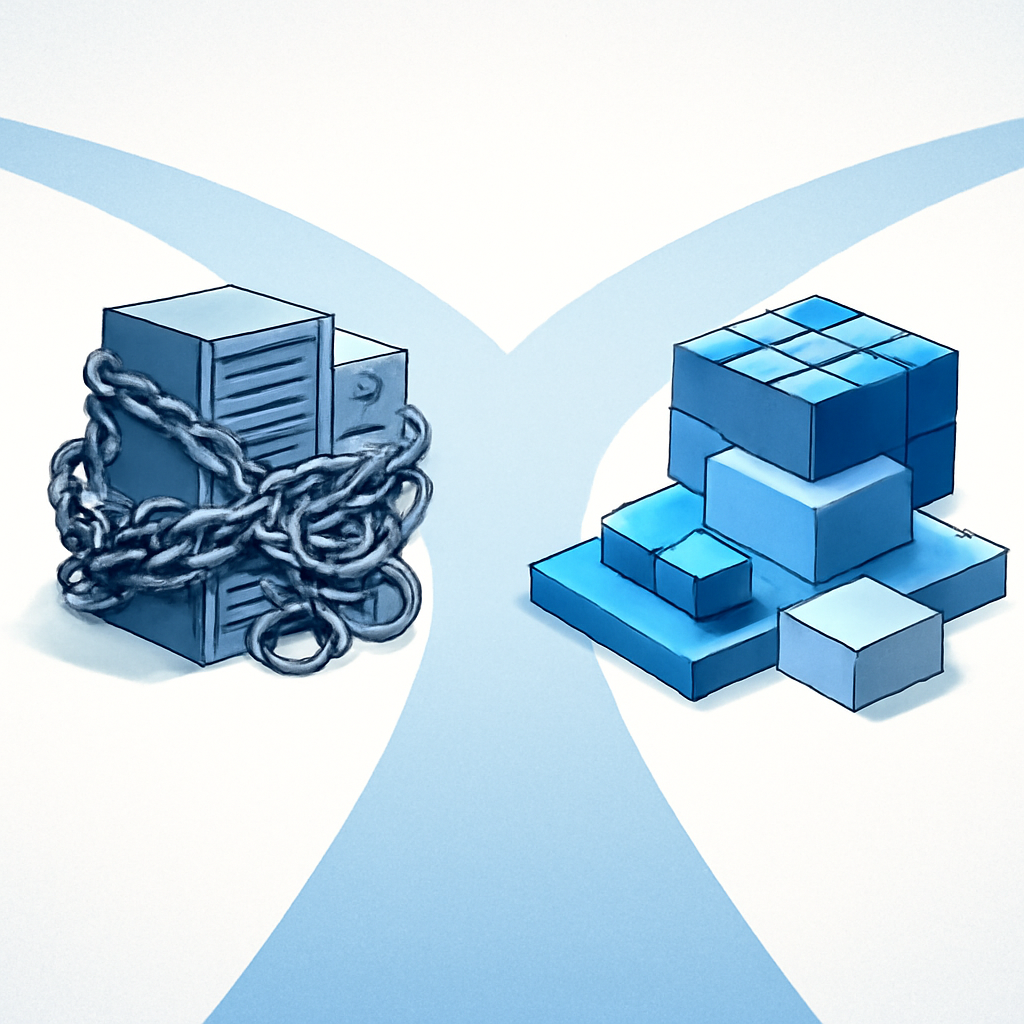
Table of Contents
- Why Modernization Creates Lock-In in the First Place
- The Institutional Knowledge Problem Compounded
- What Vendor Lock-In Actually Looks Like at Renewal Time
- How Enterprises Are Evaluating Platform-Based Approaches
- The Questions That Surface Lock-In Risk Before the Contract
- The Platform Independence Standard
- Building the Case Internally
The most expensive outcome of a modernization program is trading one dependency for another. Vendor lock-in in legacy modernization is common across the enterprise: a few years in, the vendor that modernized the system owns the codebase, controls the deployment environment and prices the renewal accordingly.

Organizations spend budget and energy leaving a system they do not control, only to land on one they do not own either. The delivery model changes; the dependency stays. CloudApper AI works with enterprise IT teams facing this decision, and the pattern from those conversations is consistent: the teams that fare best settle the ownership question before the contract is signed, not after the migration is complete.
Why Modernization Creates Lock-In in the First Place
Legacy modernization is not a single thing. It encompasses everything from re-platforming a 20-year-old ERP to replacing a custom-built claims processing system that three people in the organization still understand. But most modernization engagements share a structural dynamic: the vendor who does the work tends to produce output that runs on their infrastructure, in their proprietary environment, using their tooling.
This is not always intentional. It is often just the path of least resistance. A professional services firm has a preferred stack. A SaaS vendor has a platform they want customers to live on. An SI has accelerators and frameworks they reuse across clients. The result is that the enterprise’s new system is technically modern but architecturally dependent — and that dependency becomes apparent at the next negotiation.
The hidden cost of maintaining a system your vendor no longer supports is well understood at this point. What receives less attention is the parallel risk: the cost of maintaining a relationship with a vendor who knows you cannot leave.
Lock-in mechanisms in modernization are rarely written into contracts explicitly. They accumulate through technical decisions: proprietary data schemas that require transformation work to extract, custom APIs that only the vendor’s team knows, deployment environments where only the vendor holds the keys, and documentation that exists primarily in the heads of the engineers who built the system. By the time the enterprise realizes the extent of the dependency, re-platforming would cost as much as the original modernization project.
The Institutional Knowledge Problem Compounded
One of the reasons organizations modernize in the first place is that their existing system has become opaque — the people who built it are gone, the documentation is incomplete, and changes are risky because no one fully understands the dependencies. This is the institutional knowledge time bomb that forces the modernization conversation.
The irony is that a poorly structured modernization engagement can reproduce the same problem at the other end. The vendor’s team builds the new system. They understand it. The enterprise’s internal team is handed documentation and a support contract. Three years later, when that vendor relationship becomes contentious or the vendor pivots its product strategy, the enterprise is in a structurally similar position: a system they depend on but do not fully control or understand.
Platform-based modernization approaches address this specifically by ensuring that the output of the modernization process is owned by the enterprise — not in a legal sense only, but in a practical one. The enterprise team should be able to understand, modify, extend, and if necessary migrate the application without the original vendor’s participation. That is a different standard than what most modernization contracts actually deliver.
What Vendor Lock-In Actually Looks Like at Renewal Time
IT leaders who have been through a contentious modernization renewal describe a few recurring patterns. The first is pricing leverage: the vendor knows that migration costs are high, so annual increases arrive with the implicit understanding that leaving is more expensive than staying. The second is feature gating: capabilities that the enterprise expected to be included are positioned as add-ons or premium tiers in subsequent years. The third is roadmap misalignment: the vendor’s product priorities drift away from what the enterprise actually needs, but because the enterprise’s processes are built around the system, they cannot easily adapt.
None of these outcomes are unique to modernization — they apply to enterprise software broadly. But they are particularly acute in modernization contexts because the original engagement was positioned as solving a control problem. The organization was told it was getting off a system it could not control. Finding itself in a structurally similar position with the replacement is both practically costly and organizationally difficult to explain.
The cost comparison between maintaining an unsupported system and investing in modernization is meaningful, but it is incomplete if it does not account for the total cost of the new dependency being created. A full evaluation has to include what the organization will pay — financially and operationally — if the replacement vendor relationship deteriorates.
How Enterprises Are Evaluating Platform-Based Approaches
The enterprises that are making better modernization decisions share a few evaluation practices that distinguish them from those who end up locked in.
The first is requiring ownership of the output. Before a modernization contract is signed, they ask: if this engagement ends tomorrow, can our internal team operate, modify, and support what was built? The answer has to be yes at a practical level, not just a contractual one. This means the codebase has to be readable, the architecture has to be documented in a form the enterprise team can use, and the deployment environment has to be one the enterprise controls.
The second is evaluating the platform’s governance model separately from the delivery team. Many modernization engagements are delivered by a professional services firm on top of a platform — and the platform vendor and the SI are different parties with different incentive structures. Understanding what the platform itself locks in, independent of the SI relationship, is a distinct question that requires separate diligence.
The third is requiring that the modernization approach preserve the organization’s ability to extend the system without returning to the original vendor. Enterprise applications never stop evolving. Compliance requirements change, business processes change, integration points change. An organization that has to go back to the original modernization vendor every time it needs to extend the system has not actually solved the dependency problem — it has just moved it forward in time.
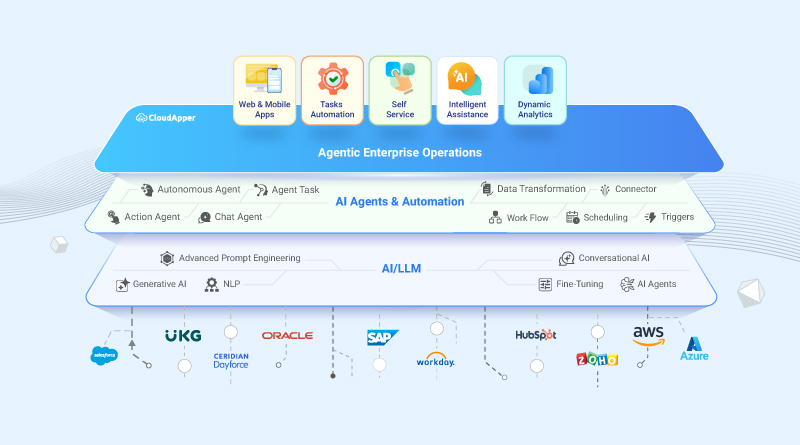
CloudApper AI’s approach to legacy modernization was built around these constraints. The platform uses AI-driven requirements extraction to capture institutional knowledge from existing systems before it is lost, translates that into governed application blueprints that the enterprise team can understand and modify, and deploys on infrastructure that the organization controls. The enterprise does not end up dependent on CloudApper’s ongoing involvement to operate what was built — and that is a deliberate design choice, not an incidental one. For IT leaders evaluating how to move fast in modernization without creating new risk, the ownership model is the place to start.
The Questions That Surface Lock-In Risk Before the Contract
There are specific questions that enterprise IT teams should be asking modernization vendors before an engagement begins. Most vendors will answer them in ways that sound reassuring. The goal is to probe past the reassurance to the structural reality.
Who owns the codebase and in what format is it delivered? Proprietary formats, binary outputs, or code that is functionally undocumented are all lock-in signals. The enterprise should be able to hand the output to a third party and have that party understand it without the original vendor’s involvement.
What is the deployment environment and who administers it? If the answer is “our cloud” or “our managed environment,” that is a dependency. If the vendor goes out of business, pivots its product strategy, or raises prices beyond what the enterprise can absorb, the enterprise needs to be able to move the application without the vendor’s cooperation.
How are extensions and modifications handled post-delivery? The answer “through our professional services team” is a lock-in indicator. A platform-based approach should allow the enterprise’s internal team, or a third-party SI, to extend the application using documented interfaces and standard tooling.
What happens to compliance certifications if the enterprise moves to a different environment? This question is particularly relevant for organizations in regulated industries. Compliance certifications are often tied to specific deployment environments. Moving the application means re-certifying — and if that process is opaque or vendor-dependent, it becomes another mechanism that makes leaving expensive. This is one reason why evaluating a vendor’s compliance posture matters as much during modernization as it does during initial procurement — a point that applies directly when evaluating secure enterprise app development platforms where compliance is non-negotiable.

The Platform Independence Standard
Platform independence in enterprise modernization does not mean using only open-source components or avoiding all vendor relationships. It means that the enterprise’s operational continuity is not contingent on any single vendor relationship remaining intact. The organization can change vendors, renegotiate aggressively, or bring capabilities in-house — and the application continues to function throughout.
This is a higher standard than most modernization engagements are designed to meet. It requires deliberate architectural choices: standard data formats, documented APIs, deployment on infrastructure the enterprise controls, and knowledge transfer that is genuine rather than performative. Vendors who are confident in the ongoing value they provide — through continued innovation, support quality, and platform evolution — do not need lock-in to retain customers. Vendors who structure engagements to make leaving expensive are, in effect, disclosing something about the quality of the ongoing relationship they expect to provide.
Enterprise IT leaders evaluating modernization options in 2026 are increasingly aware of this. The organizations that have been through one modernization cycle and ended up constrained are now among the most sophisticated evaluators in the market. They are asking the ownership and portability questions first, and they are treating vendors who cannot answer them clearly as a risk signal rather than a negotiating position.
Building the Case Internally
For IT leaders who have identified vendor lock-in risk in a modernization proposal but are facing internal pressure to move quickly, the challenge is often framing. Executives who have approved the modernization budget want to hear that the problem is being solved, not that the evaluation needs to slow down for additional diligence.
The most effective framing is total cost of ownership over a realistic time horizon — not three years, but seven to ten. A modernization approach that delivers faster in year one but creates structural dependency that costs 30% more annually by year five is not actually cheaper. Running those numbers explicitly, and presenting them alongside the ownership and portability questions, converts an abstract governance concern into a concrete financial argument.
Organizations that have been through this evaluation describe it as one of the highest-value exercises in the modernization process. The questions about ownership, portability, and extension capability are not bureaucratic hurdles — they are the questions that determine whether the modernization investment retains its value over time or depreciates as vendor leverage compounds.
CloudApper AI helps enterprise IT teams navigate legacy modernization decisions with a platform designed for ownership, portability, and internal control — not ongoing vendor dependency. If your organization is evaluating modernization approaches and wants to understand what platform-based delivery actually looks like in practice, the CloudApper team is available to walk through the specifics.

What is CloudApper AI Platform?
CloudApper AI is an advanced platform that enables organizations to integrate AI into their existing enterprise systems effortlessly, without the need for technical expertise, costly development, or upgrading the underlying infrastructure. By transforming legacy systems into AI-capable solutions, CloudApper allows companies to harness the power of Generative AI quickly and efficiently. This approach has been successfully implemented with leading systems like UKG, Workday, Oracle, Paradox, Amazon AWS Bedrock and can be applied across various industries, helping businesses enhance productivity, automate processes, and gain deeper insights without the usual complexities. With CloudApper AI, you can start experiencing the transformative benefits of AI today. Learn More
- Useful Links:
- Agentic AI
- No-Code/Low-Code
- Custom Software
- HCM Personalization
- iPaaS
- FedRAMP
CloudApper AI Solutions
- Works with







- and more.
Similar Posts

Vendor-Built Internal Applications: The Governance Gap Enterprise IT Inherited From…

What Your AI Development Platform Vendor’s Security Review Should Actually…